

Sector Antenna
- USD 80.95

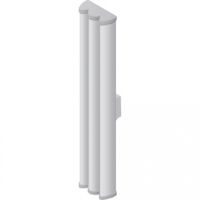
 Ubiquiti Networks AM-5G17-90 AirMAX 5 GHz 2x2 MIMO Sector An...
 In Stock
Brand: Ubiquiti Networks SKU: AM-5G17-90 Condition: NEW USD 80.95 - Special Price USD 395.00 Regular Price USD 499.00 SaleUbiquiti Networks airPRISM 5 GHz HD Sector Antenna In Stock
Brand: Ubiquiti Networks SKU: AP-5AC-90-HD Condition: NEW USD 395SAVE USD 104
USD 499 - USD 0.00 Ubiquiti Networks AM-2G16-90 AirMAX 2.4 GHz 2x2 MIMO Sector ...
 Out of Stock
Brand: Ubiquiti Networks SKU: AM-2G16-90 Condition: NEW Call us for price(669) 244-0333
- USD 0.00 Ubiquiti Networks airMAX AM-V2G-TI Titanium Sector Advanced ...Out of Stock
Brand: Ubiquiti Networks SKU: AM-V2G-TI Condition: NEW Call us for price(669) 244-0333
- USD 0.00 Ubiquiti Networks AM-5G20-90 AirMAX 5 GHz 2x2 MIMO Sector An...Out of Stock
Brand: Ubiquiti Networks SKU: AM-5G20-90 Condition: NEW Call us for price(669) 244-0333
- USD 0.00 Ubiquiti Networks AM-2G15-120 AirMAX 2.4 GHz 2x2 MIMO Sector...Out of Stock
Brand: Ubiquiti Networks SKU: AM-2G15-120 Condition: NEW Call us for price(669) 244-0333
- USD 0.00 Ubiquiti Networks airMAX AM-M-V5G-TI Titanium Sector Advance...Out of Stock
Brand: Ubiquiti Networks SKU: AM-M-V5G-TI Condition: NEW Call us for price(669) 244-0333
- USD 0.00 Ubiquiti Networks airMAX ac Sector 2x2 MIMO BaseStation 5 GH...Out of Stock
Brand: Ubiquiti Networks SKU: AM-5AC21-60 Condition: NEW Call us for price(669) 244-0333
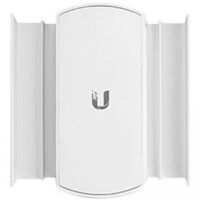
- USD 0.00 Ubiquiti Networks PRISM AP-5-60 airMAX AC Beamwidth Sector I...Out of Stock
Brand: Ubiquiti Networks SKU: HORN-5-60 Condition: NEW Call us for price(669) 244-0333
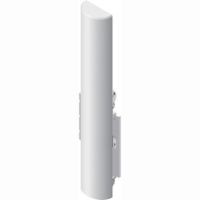
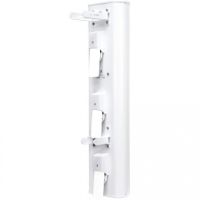
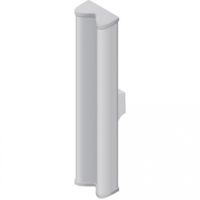
Sector Antennas for Outdoor Wireless Networks | High-Gain & Long-Range Solutions
Over the years, outdoor wireless networks have become sophisticated and demanding, requiring reliable, long-range, and scalable connectivity whether for ISPs, campuses, industrial sites, or surveillance systems. Therefore, you need to make sure that every component of outdoor WiFi networks, including Wireless Access Points (WAPs), routers, WiFi extenders, or WiFi bridges, is capable of handling growing online traffic. One such critical component of WiFi infrastructure is sector antennas, which are designed to cover a specific angular segment that is typically 60° to 120. They are therefore suitable for cellular base stations, wireless internet service providers (WISPs), and point-to-multipoint communication systems. These outdoor sector antennas can concentrate energy in defined areas, ensuing improved signal strength, reduced interference, optimized network performance, and seamless connectivity for users across diverse environments. Given the strategic significance of directional sector antennas, multiple brands are offering a wide-variety of these antennas, including 60° sector antennas, 2.4 GHz sector antennas, 5 GHz sector antennas, MIMO sector antennas, LTE sector antennas, and the like. This makes it harder for ordinary users to choose the best sector antenna for outdoor wireless networks. To address this difficulty, we have written this write-up.
In this piece of writing, we are going to discuss every in and out of the wireless sector antenna. This will help you make a well-informed decision regarding the best available sector antennas for your various needs, such as long-distance internet, point-to-multipoint networks, ISP deployments, rural broadband networks, WiFi coverage, surveillance cameras, campus wireless network, or the like.
Let’s discus WiFi sector antenna in detail.
What Are Sector Antennas:
Wireless sector antennas are also known as directional antennas that are designed to focus radio frequency (RF) signals in targeted areas. They can concentrate energy within a specific sector that typically ranges from 60 to 120 degrees. They are different from omnidirectional antennas that transmit all signals in all directions, enabling these antennas to strengthen coverage and signal strength, and decrease interference in the designated area.
Key Features of Sector Antennas:
Here are some features of these wireless sectoral antennas that you need to know.
Rugged and Durable Design:
Most of these antennas are made of durable and rugged materials, featuring a weatherproof design. They can thus withstand harsh outdoor conditions, including temperature, wind, snow, and rainfall. They often come with weatherproof builds (IP55+ rated), UV-resistant materials, high wind survival (100-200N loads), and DC-grounded metal for lightning protection, making sector antenna for point to multipoint network a preferred choice whenever users go for establishing rural broadband internet and ISP deployment.
High-Gain and Long-Distance Performance:
These are high-gain sector antennas that can generate a pie-slice coverage area with focused forward gain to achieve high gain, typically 15-21 dBi, up to 30 dBi in narrow-beam models. They can thus amplify signal strength, which is far beyond the capacity of omnidirectional antennas.
They can thus extend the range for point-to-multipoint links up to several km, making them suitable for rural WISPs, campus backhauls, and surveillance networks in your IT setups.
Directional Beam Coverage:
These base station sector antennae are made of multiple antenna elements arranged in a specific configuration, enabling them to achieve the desired directional coverage. They are designed to concentrate energy within a narrow zone, typically 60° to 120° wide, while narrowing vertically (often 7-15°) for targeted ground projection.
Benefits of Using Sector Antennas:
Sector antennas can provide multiple advantages for users, allowing them to enjoy reduced signal interference and handle high user traffic. Therefore, if you choose a high-gain sector antenna for ISP deployment or campus wireless networks, you can ensure better performance and stable connections.
Here are some benefits that you need to know.
• Minimized Interfaces:
Wireless sector antennas can concentrate energy in a narrow and targeted area. It can thus decrease interference from nearby devices. It helps in strengthening signal quality and overall performance. You can thus make sure that unwanted signals from other directions remain limited.
Since sector antennas are designed for a specific angle (typically 60°, 90°, or 120°), delivering strong signals over a wide area while maintaining focus in a particular direction.
• Scalability:
Scalability is another major feature of these high-gain antennas. You can easily expand your wireless network by adding as many antennas as you need. For instance, you can multiple antennas can be installed on a single tower (e.g., 3 × 120° for full 360° coverage), allowing you to modular network expansion without redesigning the entire system.
You can thus meet the growing needs of users. It makes an outdoor sector antenna for WiFi coverage for public places such as libraries, cafes, and the like.
• Compatible with Modern Wireless Technologies:
Sector antennas support all advanced and modern wireless technologies, including TE and 5G fixed wireless, Wi-Fi 5 / Wi-Fi 6 outdoor networks, and MIMO (Multiple Input Multiple Output) technology. You can purchase LTE sector antennas, meeting high-speed and future-ready connectivity.
Types of Sector Antennas:
Depending upon bandwidth, frequency bands, and advanced technologies, outdoor wireless sector antennas are of various types. Here are classifications of sector antennas that you need to know.
Types of Sector Antennas as Per Frequency Bands:
• 2.4 GHz sector antennas allow penetration through obstacles, making them suitable for NLOS and legacy Wi-Fi systems. They are deployed for basic WiFi deployment; however, they are susceptible to external interference.
• LTE/4G/5G sector antennas are designed for cellular communication systems, supporting wide-area mobile network coverage and massive MIMO for high-capacity base stations. These antennas can deliver high-speed internet and voice services.
• 5 GHz Sector Antennas are for higher bandwidth for 802.11ac/ax. They are more common in MIMO setups (e.g., 5150-5850 MHz, 18-20 dBi). 5GHz sector antennas for long-distance internet are preferred for high-performance wireless networks.
Types of Sector Antennas as Per Bandwidth:
Bandwidth determines the horizontal coverage angle of antennas. The right bandwidth should be determined by the area that you want to cover.
When it comes to bandwidth, you need to choose from three types of antennas: 60°-degree, 90° degree, and 120°-degree antennas.
• 600 Sector Antennas support a narrow beam for high gain (20+ dBi) and long-distance focus. They are deployed in high-density deployments. However, you need to install a higher number of antennas, 6 for 360-degree coverage.
• 90° Sector Antennas feature a balance between coverage and signal strength, making them more suitable for mid-range P2MP with moderate user densities such as ISP and enterprise networks. These are thus high-gain sector antennas for ISP deployment. You need 4 antennas to cover a full circle. They are deployed in public areas such as outdoor wireless LAN systems, public security monitors, and Bluetooth® & Public Wireless Hotspots.
• 120° sector antenna allows wider coverage (15-18 dBi gain) for suburban/rural WISPs, WiMAX, WISP, mobile communication, and cell sites. Users need just 3 units for 360-degree coverage.
Types of Sector Antennas by Technology:
Multiple high-gain sector antennas are equipped with advanced technologies, improving performance, capacity, and reliability of outdoor wireless networks. Depending upon technology, there can be various types, including:
• MIMO Sector Antennas support Multiple Input Multiple Output (MIMO) technology, ensuring increased data throughput and signal reliability. Long-range MIMO sector antenna for WISP supports multiple data streams simultaneously, making them suitable for high-traffic environments.
• Dual-Polarized Antennas are designed to transmit and receive signals in two polarizations (vertical & horizontal), improving signal quality and reducing interference, and enhancing overall network efficiency. These antennas can provide double the capacity for multiple users.
• Weatherproof Outdoor Sector antennas come with P55+, wind-rated (160+ km/h), UV-resistant, making the sector antenna for tower mounting outdoor suitable for harsh outdoor conditions.
Applications of Sector Antennas:
WiFi sector antennas are used extensively for various purposes, allowing users to establish a reliable and secure WiFi network.
For instance:
• Wireless Internet Service Providers (WISPs)
• CCTV & surveillance networks
• Campus & enterprise WiFi
• Rural broadband internet
• Smart Homes and Buildings
• Internet of Things (IoTs)
How to Choose the Right Sector Antenna:
In order to achieve reliable wireless coverage, optimal performance, and efficient network capacity, you need to choose wireless outdoor sector antennas carefully.
Here are some factors that you need to consider before making an ultimate decision regarding which sector antenna is suitable for outdoor wireless networks.
• Coverage Angle Requirement:
The first thing you need to consider is your coverage angle requirements. Concerning this, 60° antennas are for narrow coverage, higher focus, and longer reach, making them suitable for urban WiFi networking. 120° antennas are for wide-area coverage, making them preferrable choice for rural or broad WiFi coverage. Finally, 90° antennas offer a balance between gain and coverage, making them suitable for medium-sized campuses.
In short, you need to choose a small beamwidth for high-density areas and sector antennas with a larger beamwidth for open or rural environments.
• Distance (Range Needed):
You need to give serious consideration to the required range as well. In this regard, typically, longer distances demand higher gain and better line-of-sight conditions. For instance, directional antennas with narrow beamwidth, such as 600, can support a range up to 2.5km; however, you need to take care of line-of-sight, obstacles, and downtilt for optimal footprint.
Similarly, for a lower range, such as 0-2km, a sector antenna with lower gain would be sufficient. For medium range, such as 2-5 km, you should go for moderate gain antennas. High-gain antennas are recommended for 5km or plus range.
• Frequency Bands:
Before you move ahead to choose the ultimate WiFi sector antennas, you need to make sure that the antenna supports the frequency band used by your wireless equipment. In this regard, you should choose 2.4 GHz antennas for more penetration, 5GHz sector antennas for cleaner signals and higher speed, and finally, LTE / 4G / 5G sector antennas for cellular deployment.
• Gain (dBi):
Gain, measured in dBi, indicates the effectiveness of sectoral antennas in focusing on signal energy. In this regard, high-gain (18-21 dBi) antennas are known for focusing on distance/interference rejection. Likewise, medium-gain (13–17 dBi) antennas support balanced performance, and low-gain (8–12 dBi) antennas are preferred for wider coverage and shorter distances.
It should be noted here that higher gains come with a trade-off of reduced coverage width; therefore, you need to strike a balance between performance and gain.
• Mounting Environment:
You can install base station sector antennas in multiple ways. For instance, tower mounting, rooftop mounting, or pole mounting. Sector antenna for tower mounting outdoor are often considered a perfect choice for maximum coverage and long-distance links. However, you need to ensure tower mounting sector antennas feature weather-resistance and high-durability.
Likewise, pole-mounting is recommended for urban or suburban settings. They are easier to install and deploy. Finally, rooftop mounting sector antennas are suitable for city networks and ISPs.
Installation & Deployment Tools for Outdoor Sector Antennas:
Directional sector antennas require precise tools for height, alignment, interference avoidance, and multi-sector setup, if you want to have maximized coverage and performance in outdoor wireless networks.
Concerning this, here is an installation and deployment guide for WiFi outdoor directional sector antennas.
1- Proper Height & Positioning:
The height of antennas impacts signal strength and coverage.
• Mount antennas at an elevated height, say 20-50m, on a pole or tower. It will help you ensure a clear Line-of-Sight (LOS clearance over obstacles.
• You should avoid obstacles such as buildings, walls, or trees.
• Use laser levels or GPS for initial placement.
2- Alignment and Tilt Adjustment:
Correct alignment of sector antennas ensures that signals are directed exactly where they are needed. Alignment can be horizontal or vertical.
• You must point the antennas towards the intended coverage zone.
• You should avoid overlapping with adjacent sectors.
• Use tools like Sunsight AAT or RF Vision for azimuth (±1° accuracy) for optimum placing.
Similarly, tilt adjustments can significantly enhance the performance, warranting fine-tuning during testing for optimum performance.
3- Combining Multiple Sectors for 360° Coverage:
You need to install multiple sector antennas for complete 360-degree coverage. In order to fully operationalize this, you should use 3 × 120° antennas for full coverage, 4 × 90° antennas for balanced performance, and 6 × 60° antennas for high-density environments.
FAQs:
1- Where are sector antennas typically used?
They are used for various ends, for instance:
• Wireless Internet Service Providers (WISPs)
• Outdoor WiFi networks
• Campus and industrial environments
• Point-to-multipoint (PtMP) systems
2- What beamwidth should I choose?
You need to choose the beamwidth carefully. Here are some specific recommendations regarding which beamwidth you need.
• 60°: Long-range, high-density areas
• 90°: Balanced coverage and performance
• 120°: Wide coverage, fewer antennas needed
3- Can you achieve 360° coverage?
You can achieve 360-degree coverage by setting up multiple WiFi sector antennas. For instance, you will need three 120° or four 90° or six 600 units to provide complete coverage for large, high-capacity areas.
4- Are they suitable for indoor use?
Though they can be deployed indoor, however, they are primarily for high-capacity outdoor environments or very large indoor areas.
5- How high should a sector antenna be installed?
The installation method can have a drastic impact on the overall performance of the WiFi sector antennas. You should mount them on elevated position (tower, pole, rooftop) with a clear line-of-sight and above obstacles for better coverage.
Why Buy Sector Antennas from Kijero:
Kijero is a leading eCommerce firm, specializing in offering cost-effective high-performance networking solutions for startups, SMEs, or large corporations. More importantly, our collection of sector antennas is a wide-ranging one, comprising top brands, making them suitable for enterprise & ISP deployments.
Our specialty lies in offering competitive pricing and the fastest possible delivery of products to your doorstep. Contact us today and elevate your outdoor WiFi networking to the next level.
Featured Products
Ubiquiti Networks UniFi 48-Port Gigabit PoE+ Compliant Managed Switch Call us for price
(669) 244-0333