

AVR UPS
- USD 505.95

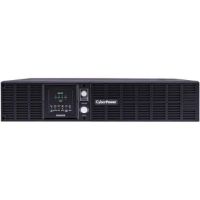
 CyberPower CPS1500AVR Smart App Equipped Uninterrupted Power...
 In Stock
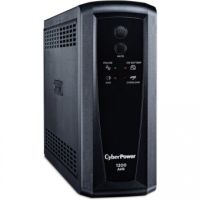
Brand: CyberPower SKU: CPS1500AVR Condition: NEW USD 505.95 - USD 176.75 CyberPower CP1200AVR AVR Mini-Tower UPS (1200VA/720W) In Stock
Brand: CyberPower SKU: CP1200AVR Condition: NEW USD 176.75 - USD 166.35
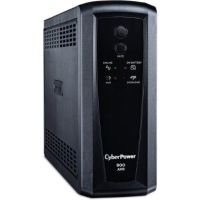
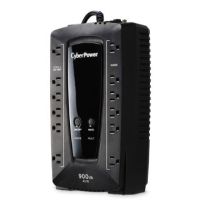
- USD 140.35 CyberPower AVRG900U AVR Series Uninterruptible Power Supply In Stock
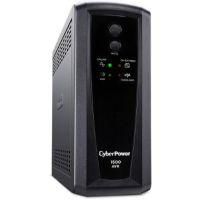
Brand: CyberPower SKU: AVRG900U Condition: NEW USD 140.35 - USD 0.00 CyberPower CP1500AVRT AVR Mini-Tower UPS (1500VA/900W)
 Out of Stock
Brand: CyberPower SKU: CP1500AVRT Condition: NEW Call us for price(669) 244-0333
AVR UPS – Reliable Power Backup with Voltage Regulation
We are living in a technology-driven world where a power outage or voltage fluctuations can cause serious disruption to service delivery, data losses, and damage to sensitive electronic equipment. To address this threat, an Automatic Voltage Regulation UPS comes in handy. AVR UPS not only provides battery backup for equipment to shut down gracefully in case of failure of utility power, but it also offers protection of connected devices from power problems and voltage fluctuations such as brownouts, surges, spikes, frequency variation, overvoltage, frequency noise, harmonic distortion, and the like. Overall, an AVR UPS system can help both business managers and home owners to avoid loss of data, minimize stress to hardware, and neutralize the threats of power fluctuations that can lead to irreparable damage, reduced lifespan, or poor performance of electronic equipment and devices. However, UPS systems with AVR are available in various types of UPS, such as Line Interactive UPS, Standby UPS, and Online UPS, making it a daunting task for users to choose the best AVR UPS for PC and, servers and other needs.
That’s why we are giving a brief overview of AVR UPS for home office and business needs, so that you can make a better decision regarding which AVR UPS best suits your needs.
What is an AVR UPS?
Uninterruptible Power Supply Units with Automatic Voltage Regulation are a type of UPS system that is designed to stabilize minor voltage fluctuations (both high and low) without switching to battery power. AVR UPSs are mostly Line-Interactive UPS systems that stabilize the incoming AC signal to maintain output power at a nominal 120 volts. You can thus protect your sensitive equipment and connected load from the likelihood of data loss, memory freezes, and system crashes. An AVR power backup system can also increase the battery life of your UPS systems.
How AVR Technology Works in UPS Systems:
Simply speaking, these purpose-built UPS systems perform the AVR task mainly through multiple stages. Under normal conditions, UPS with AVR continues monitoring incoming voltage from the main supply. Whenever there are fluctuations in voltage, the AVR function is activated. If the voltage is low, the AVR boosts it; if the voltage is higher, the AVR reduces it. Hence, the boost and trim functionality help AVR UPS systems stabilize the incoming AC voltage from the main supply without resorting to power backup. These types of UPS switch to battery backup only when power completely fails or becomes extremely unstable, so that connected devices keep running for a graceful shutdown.
Technically speaking, line interactive UPS AVR systems are provided with an AVR autotransformer. This AVR transformer is built to switch between powered coils of wire in case of a variation in incoming utility power. Hence, whenever some variation in incoming power, AVR autotransformers can increase or decrease the magnetic field and resulting output voltage for the connected load, stabilizing undervoltage brownouts and overvoltage surges without consuming backup battery power. Under normal conditions, incoming utility power doesn’t pass through the autotransformer; it simply bypasses the transformer and charges the battery. DC-AC inverter circuitry is engaged whenever there is a complete power failure. Therefore, non-utilization of battery backup under normal operations leads to improvement in battery life.
Key Features of AVR UPS Systems:
As mentioned earlier, these UPS systems integrate automatic voltage regulation, providing both battery backup as well as protection against voltage fluctuations.
Here are some features of the AVR power backup system that you need to know.
1- Automatic Voltage Regulation (AVR):
UPS AVR systems are designed to monitor incoming AC utility continuously through an autotransformer, stabilizing the output. For instance, if incoming power shows fluctuating 89-145V input, the UPS with Automatic Voltage Regulation stabilizes it to 120V output. What’s more, this correction in voltages is done without draining the battery, extending battery life by 50-70% in areas with frequent brownouts or surges.
2- Battery Backup During Outages:
These AVR battery backup UPS not only protect against voltage fluctuations, but they also deliver 2-30 minutes of runtime (depending on load and capacity) via sealed lead-acid batteries. You can thus purchase UPS with an automatic voltage regulator for routers, NAS, servers, or gaming PCs for their graceful and safe shutdown.
3- Surge & Spike Protection:
This is one of the most important features of UPS AVR systems. They come with built-in surge suppression (often 300-1000 joules), enabling them to absorb spikes up to 6kV. You can thus safeguard your sensitive electronics, like PTZ cameras or GPUs, from transients.
4- Line-interactive Topology
Most of UPS systems utilize Line Interactive design, combining AVR with an inverter for efficiency (85-90%). When power is stable, they bypass the battery. This design is more effective than Standby and Offline UPS systems, making Line interactive UPS AVR suitable for enterprise setups with moderate loads up to 1500VA.
5- Energy-Efficient Design:
This is another major feature of these line interactive UPS with AVR features. Since they can handle minor voltage variations without relying on the battery, they cause a reduction in battery cycles and decrease replacement costs. UPS thus consumes less energy and decreases battery wear.
Benefits of Using an AVR UPS:
AVR power backup system delivers key benefits for IT setups like security cameras, NAS storage, and workstations in unstable power grids, as they combine AVR with battery backup.
1- Equipment Protection:
AVR UPS online USA is designed to correct voltage fluctuations (e.g., brownouts or surges up to ±15%) without battery use. They can thus help users prevent damage to sensitive electronics like GPUs or PTZ cameras and also extend hardware lifespan by reducing stress on components.
2- Longer Equipment Lifespan:
They are an AVR UPS for voltage fluctuation protection, delivering stable and proper voltage consistently. This stable voltage enhances the lifespan of connected load as unstable and fluctuating voltage can harm your sensitive equipment.
3- Enhanced Performance:
When connected load receive stable and consistent voltage, they perform more effectively and efficiently. They deliver optimum performance because they get the amount of voltage they need. All critical applications also remain protected as minor fluctuations are addressed automatically.
4- Extended Battery Life:
They can handle minor voltage fluctuations without resorting to battery life through transformers (boost/buck). They can thus double the potential runtime, delivering sufficient battery backup for safe and graceful shutdown during true outages. They can thus lower replacement costs in enterprise environments, making them affordable AVR UPS backup power solutions to meet your needs.
Types of UPS Systems with AVR:
When it comes to UPS, there are mainly three types available in the market. However, not all of them offer the feature of automatic voltage regulation.
• Line Interactive UPS
• Standby UPS
• Online UPS
Let’s discuss them one by one.
• Line Interactive UPS with AVR Features:
Line Interactive UPS systems deliver both power conditioning and battery backup, making them suitable for areas where power outage is rare, but power fluctuations are very common. They can tolerate a wide-range of input voltage fluctuations before switching to battery backup.
As compared to other UPS types, such as Offline UPS, line-interactive UPS can deliver far better control over power fluctuations. The most notable advantage of this UPS with AVR capabilities is the voltage boost circuitry and the range of input voltage.
Line-interactive UPS technology is capable of delivering power conditioning with a 4-6 millisecond break in power. They monitor the constantly incoming voltage level and quickly balance both over- and under-voltages to deliver a stable and consistent voltage output for the connected load.
In this topology, the inverter is linked with the output and remains always on. When incoming AC power is normal, the inverter starts operating in reverse and charges the battery. However, in case of input failure, the inverter switches to battery backup. This process ensures additional filtering and reduced switching transient compared to a standby UPS.
Line-Interactive UPS with AVR features are deployed in rackmount applications below 5000V.
• Offline/Standby/Battery Backup:
Standby UPS systems are also called offline UPS because their inverter remains off during normal input power. The connected load is supplied with power directly from incoming utility power without any involvement of a charger, battery, or inverter. However, the charger and inverter remain connected with incoming power for charging.
When there is a power failure or power exceeds the limit, the built-in battery and inverter of offline UPS systems are activated and connected to the critical load by a transfer switch. This is one of the biggest advantages of standby UPS systems, as they can tolerate a wide-range of power before switching to the battery. As a result, batteries suffer from less drain and offer more backup time when power is completely off. Standby UPS takes a 6-8 millisecond break in power when transferring to battery backup.
Offline UPS systems are suitable for applications below 1500V, such as small offices, personal home computers, and other less critical applications. They can offer sufficient runtime for safe shutdown for desktop equipment, gaming consoles, workstations, wireless networks, and other electronics so that users can save work and avoid data losses.
Standby UPS systems offer a basic level of surge protection, which is not as advanced as that provided by Line-Interactive UPS.
• Online Double Conversion UPS:
The online UPS, also known as double conversion UPS offer the most advanced level of power conditioning as well as power backup. They are designed to convert incoming AC power to direct current (DC) and then convert it back to AC. This AC-DC/DC- AC design ensures that the load remains isolated from the irregularities on the main supply. Online double conversion UPS is thus capable of delivering inherent voltage regulations without traditional AVR and with zero transfer time.
The voltage regulation provided by Double Conversion UPS is the most comprehensive one, insulating connected from all kinds of power disturbances, including blackouts, brownouts, sags, surges, or noise interference. They provide 100% power conditioning, making them suitable for data centers, medical equipment, industrial systems, and critical IT infrastructure.
Applications of AVR UPS:
AVR battery backup UPS systems are extensively used in various fields, making them essential where power outage is rare, but voltage fluctuations are common, as they provide a moderate level of power conditioning.
• Home computers & gaming setups
• Office workstations
• Networking devices (routers, switches)
• Servers & IT infrastructure
• CCTV & security systems
How to Choose the Right AVR UPS:
You need to choose a UPS system with automatic voltage regulation very carefully. Here are some factors that you need to consider before making an ultimate decision.
• Power Capacity (VA/Watt Rating):
The UPS must be of the right size to meet your current as well as future needs. Concerning this, you need to determine your current power load and future power load, keeping in mind the anticipated growth of your business as well as the addition of new equipment.
You should purchase a UPS with a VA rating 20-25% above your total load. For instance, if the total device need is 700-800W, you should buy a 1000V UPS to compensate for efficiency losses and growth needs. You can find UPS having capacity from 50VA up to 20kVA, hence, giving you enough room to meet your specific home or business power protection and battery backup needs.
• Number of Communication Outlets:
UPS systems with AVR are provided with various types of communication ports, including USB, Serial, and Contact Closure Ports. They can provide power management and protection of connected devices against power surges and unattended shutdowns.
In order to find a suitable UPS for your needs, you should count the devices you intend to plug into your UPS. You should make sure that UPS comes with spaced outlets to accommodate bulky plugs. You should also look for separate surge-only outlets for peripherals.
• Backup and Runtime of UPS:
UPS runtime is the amount of time a UPS can supply battery power during an outage to help user’s carryout shutdown of the systems safely. The runtime of a UPS is affected by the total wattage of the connected load; the higher the wattage, the shorter the runtime. You can calculate runtime by multiplying UPS battery capacity by UPS input voltage and then dividing the sum by the total supported load (in watts).
As a thumb rule, you should go for UPS with 10-20 minutes for workstations to save and shut down safely, 1+ hours is suggested for mission-critical servers.
• Brand & Reliability:
You must purchase UPS with an AVR feature from trusted brands such as APC, Eaton, or CyberPower that offer a wide AVR range, bidirectional regulation, and features like pure sine wave output.
Top Brands in AVR UPS
• CyberPower
• APC
• Tripp Lite
• Eaton
FAQs:
1. What is the purpose of AVR in a UPS?
Automatic Voltage Regulation is incorporated into the UPS system to correct high or low incoming voltage to a safe, nominal level without switching to battery power.
2. Do I need a separate stabilizer if I have a UPS with AVR?
No, you don’t need it. The built-in AVR in a line-interactive UPS acts as a voltage stabilizer.
3. What should I check before buying a UPS with AVR?
You should consider capacity, pure sine wave output for sensitive electronics, user-replacement batteries, and spaced outlets, among others, before purchasing a UPS with an AVR feature.
4. Does every UPS come with AVR?
No, not every UPS comes with an AVR feature. Line-Interactive UPS usually includes AVR, whereas standby UPS has a basic AVR function, and Online Double Conversion UPS systems don’t need AVR for power conditioning.
5. Can AVR protect against power outages?
No, AVR protects against power fluctuations such as overvoltage and undervoltage. However, a UPS with AVR provides both protection against outage and voltage fluctuations.
Why Buy an AVR UPS from Kijero?
Kijero has long served its valued customers and supplied them with cost-effective IT hardware. We deal in a full portfolio of ICT hardware and IT services, including but not limited to all kinds of APS UPS, such as Standby, Line-Interactive, and Double Conversion. Additionally, our tech experts provide IT services, including solution designs for helping you access the most suitable UPS hardware customized to your needs and budget.
Contact us today and protect your sensitive equipment from power outages and voltage fluctuations at the best price in the market.
Featured Products