

Panel Antennas
- USD 0.00

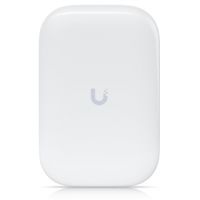
 Ubiquiti UACC-UK-Ultra-Panel-Antenna Panel Antenna Ultra
 Out of Stock
Brand: Ubiquiti Networks SKU: UACC-UK-ULTRA-PANEL-ANTENNA Condition: NEW Call us for price(669) 244-0333
Panel Antennas for High-Performance Wireless Connectivity
Over the years, directional WiFi coverage has become an important part of our everyday lives. A stable WiFi connection is a strategic necessity for all, whether businesses or homes. Whether conference rooms, long hallways, or other large open spaces, a robust WiFi system can create a powerful network, meeting the needs of a large number of users. Of all networking equipment that is deployed for such purposes, directional antennas, including sector antennas and panel antennas, have become the most crucial ones, offering multiple advantages as compared to omnidirectional or WiFi antennas. These directional antennas are designed to transmit and receive radio signals from a specific direction, delivering better range, reduced interference, and improved stability. Outdoor directional antennas are available in mainly two types: outdoor sector antennas and outdoor panel antennas. Both differ considerably in terms of beamwidth, gain, and ideal applications. Sector Directional Antennas are designed for offering narrower focus for point-to-point links. Panel Directional Antennas are built to cover a broader area for multi-sector scenarios. We are going to restrict our debate to WiFi panel antennas. If you are interested in reading about WiFi Sector Antennas, click this link. However, it should be noted that WiFi panel antennas come in various types, such as 5GHz panel antennas, 2.4 GHz panel antennas, LTE/5G panel antennas, or more. Its huge variety makes it hard for ordinary users to choose the most suitable directional sector antenna that best serves their needs.
We will help you know how to buy the best high-gain panel antenna for outdoor use in the USA, including types of panel antennas and pro-tips related to installation and deployment for optimum performance of these directional WiFi devices.
What is a Panel Antenna?
WiFi panel antennas are one type of directional antennas that come in flat and rectangular designs with an external casing protecting internal components. They are made of several radiating elements arranged in a grid pattern. Each component is connected to a feed network that delivers power to antennas.
This design enables outdoor wireless antennas to support high gain and directivity, making them essential for long-range communication and minimizing interference.
One of the key features of these outdoor directional antennas is a flat design and a focused beamwidth. This flat and compact design offers multiple advantages. For instance, a low-profile design allows easy mounting on poles, towers, and ceilings. Directional beam pattern enables these antennas to focus RF energy into a defined coverage zone. Finally, they can also deliver improved signal quality, making a directional panel antenna for a wireless bridge a great choice for outdoor deployment.
Sector Antennas vs Panel Antennas:
WiFi sector antennas and WiFi panel antennas differ in many ways, despite the fact that both are outdoor directional antennas.
|
Features |
WiFi Panel Antennas |
Wireless Sector Antennas |
|
Beamwidth |
Narrow (30°-90°) |
Wide horizontal coverage (e.g., 60°, 90°, 120°) |
|
Size/Shape |
Compact, flat rectangular |
Larger and elongated |
|
Signal direction |
Targets a specific point or small area |
Covers a sector (portion of a circle) |
|
Coverage Type |
Point-to-point (PtP) focus |
Point-to-multipoint (PtMP), sectors |
|
Gain |
Higher (10-17 dBi) |
Moderate (10-15 dBi) |
|
Cost |
Lower, high cost-performance |
Higher due to size/mounts |
|
Best uses |
Backhaul, urban interference rejection |
Base stations, large campuses |
|
Range |
Long but more focused |
Medium to long |
Key Features of Panel Antennas:
Directional panel antennas are designed to provide focused coverage over a specific sector or point‑to‑point link; that’s why they are provided with purpose-built features to accomplish this function.
Here are some features of outdoor panel antennas.
• High Gain and Long‑Range Performance:
Since WiFi panel antennas feature a narrow beamwidth that is concentrated in a specific region, the energy is concentrated in a specific direction, unlike omnidirectional antennas that spread out energy in all directions. This feature makes sure that panel antennas can feature as high as 23dB gain. However, you can also find low-gain panel antennas as well, with gain as low as 6 to 10 dB.
As a result, these high-gain panel antennas show more resistance against external interference and improved signal strength, so they can support stable and high‑quality communication over longer distances, especially in line‑of‑sight deployments.
• Indoor and Outdoor Compatibility:
Wireless panel antennas are available for both indoor and outdoor deployment. You can purchase purpose-built indoor panel antennas as well as outdoor panel antennas.
Indoor directional panel antennas feature a rectangular design with multiple internal antennas for receiving and transmitting signals in specific directions. They can be mounted on desks, shelves, the ceiling, flat surface and usually deployed as signal boosters within a building. You can thus buy these panel antennas for WiFi signal boosting for improved signal strength and performance.
Outdoor WiFi panel antennas are provided with robust built materials, often featuring higher IP ratings, say IP65. They can withstand harsh outdoor conditions, including temperature, wind, rainfall, snow, or hail. They are mounted on surfaces including rooftops, poles, and walls, making them suitable for wireless communication systems such as Wi-Fi, cellular, RFID, and the like.
• Directional Coverage:
Directional coverage is one of the most important features of these antennas. They support a narrow beamwidth, ensuring transmission and reception of radio signals from a specific direction. Therefore, they are used in point-to-point and point-to-multipoint wireless communication systems.
It should be noted that the coverage area of directional panel antennas is quite limited; you need to install multiple antennas for 360-degree coverage. However, high directionality leads to enhanced signal strength and quality in a targeted area, making them suitable for long-range connectivity and applications where precise signal control is necessary.
• Support for Versatile Frequency Bands:
WiFi panel antennas are designed to operate on various frequencies, meeting the specific needs of wireless communication. You can find outdoor panel antennas operating on 2.4GHz, 5GHz, and 6GHz frequency ranges. 2.4 GHz panel antennas are for WiFi (IEEE 802.11b/g/n) networks and other ISM (Industrial, Scientific, and Medical) applications. 5GHz panel antennas are deployed in WIFI (IEEE 802.11a/n/ac/ax) networks and other high-frequency applications. 6GHz panel antennas are utilized in Wi-Fi (IEEE 802.11ax and 802.11be).
Types of Panel Antennas:
Wireless panel antennas are available in different types, each offering a specific set of functionalities. Let’s discuss one by one to help you make a well-informed decision.
• Single Band vs Dual Band Panel Antennas:
Single-band panel antennas can work on one frequency, which can be 2.4GHz or 5GHz. They are simple to install and run, and more suitable for dedicated‑band links or legacy gear. 2.4 GHz panel antennas can support long-range connectivity; however, they are susceptible against interferences from external devices such as Bluetooth devices, microwaves, and the like. 5GHz outdoor panel antennas for point-to-point are resistant to external interference and can deliver faster speeds. However, they cannot provide long-range wireless communication.
Dual-band panel antennas can operate on two frequencies simultaneously. For instance, they can support both 2.4GHz and 5GHz frequencies. It helps users switch between the bands for optimum performance. Dual-band panel antennas allow users to enjoy better flexibility in mixed-device environments and improved network efficiency and reduced congestion.
Multi-frequency or multi-band antennas are advanced directional antennas that can support more than two bands, say 2.4GHz, 5GHz, and 6GHz. They are used in cellular or WISP backhaul radios.
MIMO / Dual Polarization Antennas:
MIMO and dual‑polarization panel antennas resemble each other in several ways, but they are not the same. They differ in both design and functionality.
MIMO (Multiple Input Multiple Output) Panel Antennas feature multiple antenna ports (for example, 2×2 or 4×4), allowing the radio to send and receive multiple spatial data streams over the same frequency channel. More simply speaking, they are provided with multiple antennas within one unit. They provide multiple advantages such as improved data throughput, enhanced signal reliability and stability, and reduced interference and signal fading.
Dual Polarization Panel Antennas integrate two orthogonal polarizations. They can receive and transmit signals in horizontal and vertical polarization. They also provide multiple advantages, such as better signal reception in complex environments and increased capacity and efficiency. Dual polarization panel antennas for networking are used extensively in modern 4G LTE and 5G networks, where high speed, low latency, and strong connectivity are essential.
Applications of Panel Antennas:
Wireless panel antennas are used extensively across fields and domains. For instance, they are deployed in:
• WiFi networks
• Wireless bridges
• Point-to-point communication
• Cellular networks (4G/5G)
• CCTV & surveillance systems
• Broadcasting
Benefits of Using Panel Antennas:
WiFi panel antennas offer multiple advantages, helping users enjoy enhanced performance and optimum signal strength.
• Long-Range Coverage:
Thanks to high directionality and narrow beamwidth, outdoor panel antennas can transmit and receive signals from long-distance. They can extend signals as long as 30km, making them suitable for long hallways, outdoor links, or large facilities that demand stable connectivity over distance.
• Reduced Interferences:
Directional WiFi panel antennas support focused beamwidth, ensuring minimum pickup from other devices and reduced noise as well. Therefore, these long-range WiFi panel antennas are considered preferable for high-density areas like urban networks or IT infrastructures.
• Improved Signal Stability:
Narrow beamwidth and directionality ensure consistent high signal strength in the target direction. You can thus establish a stable, low-latency, and reliable Wireless connections. Therefore, outdoor panel antennas are suggested for applications like surveillance camera feeds or enterprise WiFi, where dropouts are unacceptable.
• Easy installation:
They are provided with a compact and lightweight form factor, making it convenient for network administrators to install and mount them on various surfaces, including walls, poles, or rooftops. You can deploy them for various applications, such as WiFi signal boosting, point-to-point communication, wireless bridges, and more.
• Cost-Effective Network Solution:
Panel antennas are comparatively cheaper to install and maintain. These affordable panel antennas for business networks, though, offer steeper costs as compared to omnidirectional antennas; they have lower long-term costs. It is because of the fact that you don’t have to install additional access points or WiFi extenders. Furthermore, the reduced downtime and fewer devices in scalable IT or surveillance deployments also ensure cost savings on a long-term basis.
How to Choose the Right Panel Antenna:
Wireless panel antennas must be chosen carefully as they play a key role in determining the speed and performance of your Wireless connections. Here are some factors that you should look into before making an ultimate decision.
• Match the frequency and Application:
Frequency is the first thing you should consider. It must match your applications. WiFi panel antennas are deployed for Wi‑Fi (2.4/5 GHz), LTE/5G, or point‑to‑point links. Concerning this, you need to choose either a 2.4GHz antenna, a 5GHz panel antenna, or a 6GHz panel antenna. You should choose the WiFi panel antenna that uses the same frequency range as your router, modem, and access points.
Here are specific recommendations in this regard.
• 2.4GHz antennas are for better range, but they suffer from more interference
• 5GHz supports higher speed, less interference, but shorter range
• LTE / Cellular bands are utilized for 4G/5G connectivity
It shows that wireless antennas with the right ensure optimum performance and compatibility with your devices.
• Use Gain and Beamwidth Suited to Your Coverage:
Gain is another important consideration. It shows how effectively a wireless panel antenna focuses signal energy in a specific direction. In this regard, as a thumb rule, high-gain antennas (12–18 dBi) support long-range and low-gain antennas (6–9 dBi) support wider coverage but shorter range. Higher gain leads to a stronger signal focus in a specific direction.
The specific recommendations regarding which antennas, vis-à-vis gain, are given below.
• Choose an antenna with 8-10 dBi gain, in case you are going to set up a short-range indoor wireless network.
• Go for an antenna with 12–15 dBi for medium‑range indoor/outdoor (warehouse, campus) wireless connection.
• Select an antenna with 15–20 dBi for long‑range point‑to‑point (a few km) wireless communication.
• Check Polarization and Radiation Pattern:
Polarization of WiFi panel antennas can be horizontal, vertical, or both. Normally, the majority of WiFi antennas support vertical polarization; you should match it with your access points or routers. You make sure of similar polarization on both ends. This horizontal-to-horizontal and vertical-to-vertical polarization can help you save 15–20 dB loss from cross‑polarization.
WiFi panel antennas with horizontal polarization are selected for specific deployment to reduce noise. Similarly, Dual Polarization Panel Antennas support both orientations, ensuring improved signal strength and stability.
• Panel Antennas vs Other Antennas:
WiFi antennas can be various types, including omnidirectional antennas, Yagi antennas, and more. Let’s compare them with the WiFi panel antenna so that you can make a better decision.
Panel vs Omnidirectional Antenna
|
Features |
Wireless Panel Antennas |
WiFi Omnidirectional Antennas |
|
Coverage pattern |
Directional and focused |
360° horizontal coverage |
|
Range |
Long range |
Shorter effective range, spread in all directions |
|
Gain Profile |
Higher gain in one direction |
Lower gain |
|
Installation |
Must be aligned towards the target area |
Easy to install |
|
Use Cases |
Building‑facing coverage, long‑range links, directional Wi‑Fi/LTE |
General coverage around Access points |
Panel Antennas vs Yagi Antennas:
|
Features |
Yagi Antennas |
Panel Antennas |
|
Beamwidth |
Narrow (often 20–30° or less) |
Moderate (typically 30–70°) |
|
Gain & directivity |
Higher gain |
Moderate gain |
|
Range |
Optimized for long‑distance point‑to‑point links |
Medium to long range |
|
Design |
Linear “stick” with elements on a boom |
Flat, rectangular panel |
|
Uses |
Long‑range outdoor links, TV, radio, rural LTE |
Indoor Wi‑Fi, building‑side coverage, LTE/CBRS |
FAQs:
1- Can I use a directional antenna for non-line-of-sight (NLOS) links?
Though directional antennas perform well for a Line-of-Sight arrangement, you can deploy them for NLOS provided that you look for lower frequency bands, MIMO diversity, or use multiple paths/reflector strategies.
2- Is a higher-gain panel antenna always better?
No, they are not. High gain leads to narrow coverage and increased pointing sensitivity. You should look for a gain that matches the link geometry and operational tolerance.
3- What maintenance is required for outdoor directional antennas?
It depends upon the outdoor environment; you need to carry out regular inspections for rust/corrosion, secure mounting, cable integrity, and performance checks every 6-12 months.
4- What are WiFi panel antennas used for?
Wireless panel antennas are used for multiple applications. For instance:
• Point-to-point wireless links
• Extending WiFi coverage outdoors
• Connecting buildings or remote areas
• Wireless ISPs (WISPs)
• CCTV and surveillance networks
5- What is beamwidth in panel antennas?
They mainly support a narrow beamwidth that supports longer distances and a focused signal. Likewise, they also come with a wide beamwidth that delivers broader coverage and shorter distances.
Why Buy Panel Antennas from Kijero:
Kijero is a leading eCommerce firm, specializing in offering cost-effective high-performance networking solutions for startups, SMEs, or large corporations. More importantly, our collection of directional antennas, including WiFi panel antennas, is a wide-ranging one, comprising top brands, making them suitable for enterprise & ISP deployments.
Our specialty lies in offering competitive pricing and the fastest possible delivery of products to your doorstep. Contact us today and elevate your outdoor WiFi networking to the next level.
Featured Products
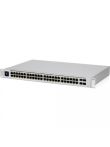
Ubiquiti Networks UniFi 48-Port Gigabit PoE+ Compliant Managed Switch Call us for price
(669) 244-0333