

Optical Transceiver Modules
- USD 0.00

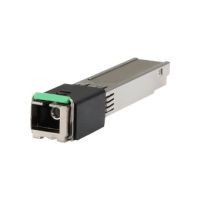
 Ubiquiti UACC-UF-OM-XGS Fiber XGS/XG Optical Transceiver
 Out of Stock
Brand: Ubiquiti Networks SKU: UACC-UF-OM-XGS Condition: NEW Call us for price(669) 244-0333
- USD 0.00 Ubiquiti UF-Instant UFiber Instant Optical TransceiverOut of Stock
Brand: Ubiquiti Networks SKU: UF-INSTANT Condition: NEW Call us for price(669) 244-0333
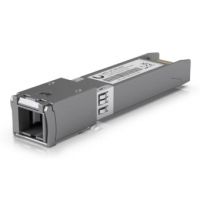
Buy Optical Transceiver Modules | SFP, SFP+, QSFP Fiber Optic Modules
The exponential growth in bandwidth-intensive applications in data centers, high-performance computing (HPC), and artificial intelligence (AI) has made a reliable, fast, and secure network indispensable for homes, offices, and businesses. The meteoric rise in demand for multi-gigabit ethernet working has made fiber optics-based networking quite popular because optical fibers feature ultra-fast speed, long distance, safety and stability, anti-interference, and scalable capacity expansion. Of all the components that you need for fiber optics communication, including optical fiber cables, optical amplifiers and repeaters, and supporting hardware, optical transceiver modules are the most crucial ones. Optical transceiver modules are hot-swappable and pluggable devices that are designed to convert electrical signals to optical signals and vice versa. They are embedded within the host networking device, such as network switches, routers, NICs, and the like. We are going to discuss the ins and outs of optical modules so that you can buy optical transceiver modules online confidently.
What Are Optical Transceiver Modules?
Pluggable optical modules are an integral part of fiber optics-based networking. These modules are built to perform the most critical functions: conversion of electrical signals into optical signals and vice versa. These network transceivers are designed in a way to be inserted into networking equipment, such as switches, routers, and servers. Within networking devices, they are interfaced with fiber optics cabling, and they are often deployed as optical interconnects at the termination of fiber optic links.
Optical modules feature a hot-swappable and pluggable design. Network administrators can thus insert or remove hot-swappable modules without any need for powering down the network. You can thus scale your network up without any disruption to business operations and services.
Optical Transceiver Modules vs Optical Transceivers:
Though these terms are interchangeable, there are differences between optical transceiver modules and optical transceivers.
Let’s explore their differences.
• An optical module is a passive device, an accessory that cannot be used independently. However, transceiver modules are separate active devices with their own housing, power input, and both electrical and optical ports.
• Optical transceiver modules are hot-swappable and pluggable, ensuring their removal or insertion is quite easy and convenient. Optical network transceivers are fixed; therefore, upgrading or replacing them is quite a daunting task.
• Optical modules are comparatively expensive; however, they provide stable performance. Network transceivers are relatively inexpensive; however, they can cause up to 30% transmission losses due to the power adapter, optical fiber state, network cable state, and other factors.
• Optical fiber modules are used mainly in optical network devices such as aggregation switches, core routers, OLTs, and the like. They are also used for computer video, data communication, wireless voice communication, and other optical network backbones. Optical transceivers are deployed for those settings where optical fibers are used to extend transmission range. Moreover, they are located at the access layer of broadband MAN.
Types of Optical Transceiver Modules:
The choice of type of transceiver modules is critical as it determines network density, connectivity, speed, port density, connector types, compatibility, and more. Therefore, you need to choose the network transceiver modules carefully to ensure efficient, high-speed data transmission in evolving networks.
1- Small Form Factor Pluggable or SFP Transceiver Modules:
SFP transceiver modules are deployed for up to 1Gb fiber optics-based Ethernet connections. They represent a remarkable advancement in network technology, helping users establish high-speed data transmission for varying distances.
Under the SFP category, you can find various standards to help you meet your varying needs. For instance:
• The 1000BASE-T standard is for short-range communication up to 100m. They feature an RJ45 copper port for connectivity.
• The 1000BASE-SX standard is for multi-mode fiber optics connections, supporting up to 550m distance and operating at 850nm wavelength. These SFP transceivers are suitable for short-range communication.
• The 1000BASE-LX standard is for single-mode fiber optics connections, supporting up to 10km distance and operating at 1310nm wavelength.
• The 1000BASE-EX standard is also for a single-mode fiber optics Ethernet connection. They can support up to 40km range at 1310nm wavelength. These single-mode optical transceivers are recommended for reliable data transmission over extensive distances.
• The 1000BASE-ZX standard is for ultra-long range data transmission, covering up to 80km at a wavelength of 1550nm, making long-range fiber transceivers a great choice for ultra-long-range applications.
• Bidirectional (BiDi) Optical Transceivers have revolutionized fiber optics transmission. They support bidirectional transmission over a single fiber. However, you need to make sure that the two BiDi SFP transceiver modules share the same wavelength to ensure a successful connection.
SFP fiber modules are mostly utilized in enterprise networks, access switches, and telecom systems.
2- SFP+ Transceiver Modules:
SFP+ optical transceiver modules are an enhanced version of the SFP form factor. They are 10G SFP+ transceiver modules that support 8 Gbit/s Fiber Channel and 10 Gigabit Ethernet. You can deploy these high-speed fiber optic modules for robust connectivity for high-speed networks.
SFP+ optical transceiver module comes with an LC 2-strand or 1-strand (for BiDi) connector. Alternatively, there is also a 10GBASE-T copper transceiver module that comes with an RJ45 connector, demanding Cat6a cable for maximum distance. You are recommended to go for Shielded 6a cables to avoid EMI issues.
3- SFP 28 Transceiver Modules:
SFP28 transceiver modules feature the same form factor as that of SFP+ and SFP. This enhanced version of SFP+ supports impressive 25 Gbps on a single channel, making these fiber optic SFP modules suitable for switches, routers, and other networking devices.
4- Quad Small Form-Factor Pluggable (QSFP) or QSFP Transceivers Modules:
QSFP transceiver modules are advanced optical fiber modules that can support up to 100Gbps speed, supporting a data handling capability that is four times higher than that of SFP fiber modules. QSFP fiber modules are therefore deployed for applications requiring lightning-fast data transfer rates.
Similar to SFP, QSFP transceiver modules are also available in various variants. For instance:
• QSFP+ transceiver modules can support four channels operating at a 10Gbps data transfer rate each. QSFP+ modules are therefore 40G QSFP+ optical modules, making them suitable for high-speed networking.
• QSFP 28 optical transceiver modules add more to the data transmission capacity. They can deliver 25Gbps data transmission speed for each channel, supporting an aggregate 100Gbps speed. They are therefore 100G QSFP28 fiber transceivers suitable for robust, high-speed connectivity solutions in the ever-evolving landscape of modern technology.
• QSFP56 transceiver modules deliver a 50Gbps data transfer rate for each channel. Therefore, they can support a 200Gbps aggregate data transfer rate.
• QSFP-DD 400G stands for QSFP Double Density. They support 8 channels, and every channel can deliver 50Gbps speed; therefore, they can deliver staggering 400Gbps total speed.
• QSFP-DD 800G can deliver up to 800Gbps data transfer rate. They are focused more on the next generation of the QSFP modules.
5- CFP (C Form-Factor Pluggable):
CFP optical transceiver modules feature a larger form factor, and they can deliver impressive speed, reaching a 100 Gbps data transfer rate. They are often recommended for long-distance optical transmission, and they support both single-mode and multi-mode transmission.
CFP modules are available in various variants. For instance:
• Standard CFP Transceivers modules feature a compact size and deliver up to 100Gbps data transfer rate, helping network administrators decrease congested cabling in data centers.
• CFP2 Fiber Transceivers modules are provided with a form factor that is half of standard CFP modules. They offer an extensive range of customization options, making Ethernet optical transceiver modules preferable for regional applications and data center interconnections.
• CFP4 Fiber Transceivers feature a size that is a quarter of the standard CFP, making them suitable for space-constrained and crowded settings.
• CFP8 Fiber transceivers feature the same size as that of CFP2; however, they can deliver four times the bandwidth density of CFP2, allowing users to enjoy an incredible 400Gbps aggregate data rate. You can thus find these data center optical transceivers ideal for high-speed fiber optic transceivers for enterprise networks.
Key Features & Benefits of Optical Transceiver Modules:
The role of transceiver modules is key as they are crucial components of high-speed networking over fiber optic cables.
Here are their highlighted features and benefits that businesses, whether large or small, can accrue.
1- High-Speed Data Transmission:
This is one of the most important advantages of fiber optics modules. As compared to copper-based networking, fiber optics communication is faster and more reliable. Various variants of transceiver modules, including CFPs, QSFPs, and SFPs, can support as high as 400Gbps data transfer rate, making them suitable for bandwidth-intensive applications, including video streaming, cloud computing, and data center networking.
2- Hot-Swappable Design:
Fiber transceivers for routers and switches, and other applications support a hot-swappable design. Users can thus insert or replace modules without shutting down the network device. They therefore ensure reduced downtime, simplified maintenance, and improved operational efficiency.
3- Compatibility with Networking Devices:
This is a very crucial feature of both short-range optical transceivers and long-range optical transceivers. They come in a standardized form factor, making them compatible with wide-ranging switches, routers, servers, and other networking equipment. You can purchase easily compatible transceiver modules for Cisco and other manufacturers like Ubiquiti Networks.
4- Long-Distance Communication:
Fiber optics transceiver modules are designed to support both long-range and short-range communication. For instance, Single-Mode Transceiver Modules can cover 100km and beyond without amplification required in the telecommunication infrastructure. Multi-Mode transceiver modules are for short-range transmission, ranging from 300 meters to 2 km, depending on speed and fiber type (OM1-OM5).
What’s more, the distance can reach thousands of kilometers if you use specialized amplifiers. For instance, submarine systems, such as Cisco's 400G technology, can achieve 3,000 km and beyond.
Applications of Optical Transceivers:
Network optical transceiver modules are used extensively in wide-ranging industries, domains, and niches. For instance, they are utilized for the following industries and domains, though the list is not exhaustive.
• Data center networking
• Enterprise LAN and campus networks
• Telecommunications and carrier networks
• Fiber-to-the-Home (FTTH) deployments
• Cloud computing infrastructure
• 5G mobile backhaul and fronthaul
• Storage Area Networks (SAN)
• High-performance computing (HPC)
• Video surveillance systems
• Industrial and automation networks
• Smart city infrastructure
• Internet Service Provider (ISP) networks
• Broadcasting and media transmission
• Military and defense communications
• Long-haul and metro optical networks
How to Choose the Right Optical Transceiver:
You need to choose the optical transceiver modules carefully, as this decision has a direct impact on the network speed and performance.
Here are some factors that you need to consider before making the ultimate decision regarding which optical transceiver modules best serve your needs.
1. Data Rate & Speed:
As we have discussed earlier, even within the same form factor, say SFP, you can find various variants supporting different levels of speed. For instance, QSFP28 can support 4 lanes at 25Gbps data rate for a total of 100Gbps, while a QSFP56 supports 4 lanes of 50Gbps with an aggregate 200Gbps. Similarly, you can find up to 25Gbps speed within the SFP+ form factor, allowing you to meet both the needs of specific form factors as well as networking speed.
Here are some recommendations in this regard:
• 1G (Gigabit Ethernet) Transceivers Modules are for basic enterprise networks and legacy systems
• 10G Transceiver Modules are for data centers and high-speed enterprise links
• 40G transceiver modules are for aggregation and spine-layer connections
• 100G Transceiver Modules are for high-bandwidth data centers, cloud, and telecom networks
2. Fiber Type (Single-mode vs Multimode):
Single-Mode Transceiver Modules and Multi-Mode Transceiver Modules offer a specific set of features and capabilities.
For instance:
Single-Mode transceiver modules are designed to act as long-range, ultra-long-range, and extended-range transceiver modules. They are suitable for long-range transmission, supporting 10km, 40km, and 100km. They are mostly used in telecom and wide-area networks.
Multi-Mode transceiver modules are for short-range communication. These short-range transceiver modules can support high-speed but short-range networking extending up to 550m at max.
3. Distance:
When it comes to distance covered by your optical transceiver modules, you can choose various options such as multi-mode optics, which offer up to 550m distance, whereas single-mode modules can help you establish a network that is thousands of kilometers apart.
Concerning distance, you can use various transceiver modules, including SR transceiver modules, LR transceiver modules, ER transceiver modules, and ZR transceiver modules.
• SR or Short-Range Transceiver Modules are optical devices designed for high-speed data transmission over relatively short distances, ranging from 300m to 400m. They are used mainly within buildings, and they support an 850nm wavelength. SR transceiver modules are multi-mode transceivers, making them suitable for data center optical transceivers.
• LR (Long Range) Transceiver Modules are medium-range optical transceivers, supporting up to 10km data transmission range. They utilize a 1310nm wavelength, enabling them to strike a balance between manageable dispersion over several kilometers and signal loss.
• ER (Extended Range) Transceiver Modules are high-performing optical transceivers designed for long-distance data transmission. They can transmit data up to 40km at 10Gbps, 40Gbps, and even 100Gbps data rates. ER modules are single-mode transceivers, and they feature a 1310nm wavelength.
• ZR Transceiver Modules are ultra-long-range transceivers, supporting up to 80km or beyond range. They are also single-mode modules and come with support for 1550 nm wavelength. Most of the advanced ZR transceiver optics come with Digital Diagnostics Monitoring (DDM/DOM), allowing users access to real-time tracking of temperature, laser power, and voltage.
4. Connector Type (LC, MPO, SC):
The right type of connector can determine ease of installation and scalability. SC, LC, and MPO connectors are the most common types of connectors used in optical transceiver modules.
• LC connectors are mostly found in 1G and 10G fiber optics transmission. SFP and SFP+ form factors are provided with this type of connector, and they are also found in duplex fiber connections.
• MPO/MTP Connectors are for 40G and 100G parallel optics, and they are deployed in high-density data center links. They are also found in breakout applications. MPO connectors are multi-fiber connections; they can hold up to 24 fibers.
• ST Connectors feature a bayonet-style coupling mechanism, making them suitable for outdoor settings such as campuses where long-distance networking is required.
However, those transceivers that feature Very Small Form Factor (VSFF) are provided with CS, SN, and SN-MT connectors to meet the demand of high-density networks.
5. Host Compatibility:
Before you finalize the specific optical transceiver modules, you need to know how restrictive your networking equipment is when it comes to optical modules. You need to consider at least three types of compatibility factors:
First, you need to make sure that optical transceiver modules support the same protocols and standards as utilized by your network, such as Ethernet, Fiber Channel, or InfiniBand.
Second, you need to ensure the form factor compatibility of your host networking devices. For instance, whether they accept SFP form factor, QSFP, or CFP, etc.
Third, manufacturer compatibility should also be given serious consideration. There are some manufacturers that restrict third-party devices. Therefore, you need to thoroughly check this factor as well.
Frequently Asked Questions or FAQs:
1- What causes a 25G link failure?
There are multiple causes; however, here are some top reasons for 25G link failure:
• Dirty connectors (clean with cassette)
• Wrong fiber type
• Rx power too low or too high
• Overheating (check DOM temp)
• Non-compliant module (e.g., SL)
• Modal dispersion in multimode fiber
• Connector/patch cord quality
• Use of non-standard modules
2- Are third-party optical transceivers compatible with OEM equipment?
Yes, multiple third-party transceivers show compatibility with brands like Cisco, Juniper, and HP. Having said that, it is always better to check compatibility first.
3- What is DDM/DOM?
Digital Diagnostics Monitoring (DDM) is an important feature of transceiver modules that support real-time monitoring of parameters such as temperature, optical power, and voltage.
4- How to troubleshoot fiber optics connection issues?
• Check for compatibility/vendor coding.
• Verify the transceiver matches the fiber type (SMF vs. MMF).
• Clean the fiber optic connectors.
• Ensure the transceiver is fully seated (hot-swappable)
5- What is the difference between OEM and compatible transceivers?
OEM transceivers are approved or made by manufacturers, whereas compatible optical transceivers are third-party devices programmed by vendors to work with specific devices.
Why Buy from Kijero:
Kijero is a prominent eCommerce firm in the USA offering cost-effective, scalable, and top-notch networking solutions from leading manufacturers such as Netgear, Juniper, StartTech and more. Our product portfolio is extensive, covering routers, modems, networking cables, and, more importantly, Fiber Optics Transceivers.
Contact us today and take your networking experience to the next level at the best possible price in the USA market.
Featured Products