

Fixed Cameras
- USD 0.00

 Axis Communications Q1941-E Thermal Network Camera with 60mm...
 Out of Stock
Brand: Axis Communications SKU: 0789-001 Condition: NEW Call us for price(669) 244-0333
- USD 0.00 Axis Communications 0647-001 Q2901-E Temperature Alarm Therm...Out of Stock
Brand: Axis Communications SKU: 0647-001 Condition: NEW Call us for price(669) 244-0333
- USD 0.00 Axis Communications Q2901-E Temperature Alarm Thermal Camera...Out of Stock
Brand: Axis Communications SKU: 0645-001 Condition: NEW Call us for price(669) 244-0333
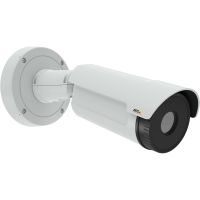
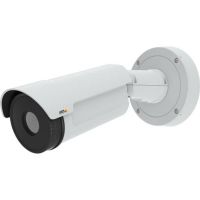
Fixed Security Cameras – HD CCTV Fixed Lens Cameras for Indoor & Outdoor Surveillance
Physical security threats are evolving, causing serious risks for properties and families. Users need to install security and surveillance systems to monitor and keep a constant eye on their properties. Of all the available options in the market, such as Pan-Til-Zoom cameras, Modular Cameras, and more, fixed security cameras are deployed extensively as an effective surveillance solution because of multiple advantages. Firstly, they come with a fixed lens with a non-adjustable focal length, supporting a fixed surveillance of specific areas continuously. Secondly, they require minimum maintenance, and unlike PTZ or varifocal cameras, they are cost-effective. Therefore, stable footage and a constant field of view make these fixed lens cameras suitable for offices, retail stores, warehouses, parking lots, and homes.
However, fixed cameras are available in a great variety of specifications, making it hard for users to decide which fixed surveillance cameras are suitable for their indoor or outdoor security needs. In this article, we will help you know everything you need to know about these surveillance cameras.
Let’s discuss the ins and outs of fixed surveillance cameras.
What Are Fixed Security Cameras:
Simply speaking, fixed surveillance cameras are provided with a pre-determined and non-adjustable lens. It means that, unlike PTZ cameras or cameras with a varifocal lens, these cameras come with a set focal length, featuring a fixed Field of View (FoV) and magnification that cannot be changed later on.
These fixed lens security cameras for surveillance are provided with two types of lenses: 2.8mm or 4mm lenses.
• 2.8mm lens fixed cameras offer a wide-angle view, making these surveillance cameras suitable for covering broad spaces like parking lots, entryways, or store interiors.
• 4mm lens fixed cameras support a narrower view and greater details, making them preferable for monitoring specific points of interest like doors, hallways, or registers.
Fixed cameras can be various types, their usages and working. For instance, you can purchase CCTV fixed cameras, IP fixed cameras, indoor fixed cameras, outdoor fixed cameras, and more. You can thus meet all kinds of your surveillance and monitoring needs with ease and confidence.
In short, fixed surveillance cameras supports constant view without requiring adjustments. They are often used as professional CCTV surveillance systems.
Key Features of Fixed Lens Security Cameras:
Here are the features of these professional surveillance cameras that you need to know.
• Cost-Effectiveness:
Fixed lens cameras are comparatively more budget friendly as compared to varifocal or PTZ (pan-tilt-zoom). It is because of the fact that they feature a fixed lens that is less complicated than PTZ cameras that are provided with motorized movements. They also feature a compact design, making them suitable for an entire campus or commercial facility where cost can be a major limiting factor.
• High Resolution Fixed Security Cameras for Commercial Use:
These professional fixed cameras for security systems are designed to support wide-ranging resolution. For instance, they feature 2MP to 12MP or higher resolution sensors, supporting frame rates of 25-30 FPS at 1080p or 4K for smooth video. Users can thus choose HD, Full HD, and 4K recording options to meet their specific security or surveillance needs.
• Night Vision Monitoring:
The fixed cameras come with night vision and motion detection capabilities. They are provided with Wide Dynamic Range (WDR) or HDR for handling bright/dark contrasts. Similarly, they also support IR LEDs for night vision up to 20-50m.
What’s more, various models of fixed cameras are provided with features like auto gain control, white balance, and back light compensation.
• Durability and Connectivity:
Some fixed cameras, such as bullet cameras, are designed for outdoor surveillance needs. They are provided with IP66/IP67 weatherproofing and IK10 vandal resistance. They are also fixed bullet cameras that come with PoE(Power over Ethernet) that supports transmission of both data and power through a single cat cable.
They also feature wireless connectivity, allowing network administrators to install these cameras where it is not possible to deploy wiring. You can thus find both indoor and outdoor fixed security cameras to meet your specific needs.
• Wide-Angle Coverage:
Many fixed surveillance cameras are designed to offer a wide-area coverage in a single field of view. They can thus reduce of needs of a large number of cameras to cover a wide-angle. You can thus ensure both simplified installation and cost-saving.
• Easy Installation:
The inherent simplicity is the most important feature of these cameras. They are easy to set up and run as they don’t come with any moving parts; users don’t need to perform angle adjustment or configuration settings.
Types of Fixed Security Cameras:
Fixed cameras are available in different body styles, each offering a specific set of features and capabilities. for instance:
• Bullet Fixed Cameras:
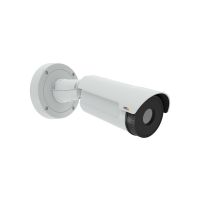
Bullet fixed cameras are the most classical ones, featuring an elongated, cylindrical shape resembling a bullet. They come in protected, boxy, and protracted shapes, making them easily visible and creating strong deterrence effects for potential criminals or intruders.
They feature a weatherproof and prominent housing that comes with an IP66/IP67 rating, making them suitable for outdoor use. They support easy mounting on walls, ceilings, or poles. Some vandal-resistant bullet cameras are also provided with sturdier housing with a 1K-10 rating.
Since bullet cameras come in long and cylindrical shapes, they can house larger lenses, delivering more details over long distances. They are also suitable for gathering at dark sites; therefore, they are deployed for low-light placements such as parking lots or garages.
In short, bullet fixed cameras are suitable for long-range monitoring of perimeters, driveways, or parking areas because of their directional focus and deterrence factor.
• Dome Fixed Cameras:
Dome fixed security cameras are also quite popular among houses and offices. Dome cameras feature a protective dome in which the camera is housed, making these fixed cameras vandal-resistant as well as weatherproof.
Dome surveillance cameras are provided with IP and IK ratings. IK rating denotes their vandal resistance, and IP rating indicates the level of resistance against temperature, dust, wind, ice, shock, and the like.
These cameras provide multiple advantages. For instance, they are notoriously tamper-proof and very inconspicuous, making them very difficult for users to detect or tamper with. Secondly, the dome design obscures the direction of the lens, making sure that no one is able to avoid the gaze of the camera.
Typically, dome fixed surveillance cameras are provided with a fixed lens, which means their focal length cannot be changed. However, these cameras are provided with wide-angle lenses, supporting wide-area coverage and making them suitable for subtle surveillance in locations like casinos, retail stores, malls, and as school security cameras.
Downsides are also there. Dome cameras cannot create a strong deterrence, and they cannot be repositioned without being removed or reinstalled.
• Box Fixed Cameras:
Box cameras are versatile, customizable, rectangular surveillance devices designed for continuous and professional surveillance and monitoring. Box cameras offer multiple advantages. For instance, they are
customizable, allowing users to select specific lenses for wide-angle or long-range zoom. Users can also choose a camera housing for specific end uses, such as vandal resistance or outdoor deployment.
Box cameras create a strong deterrence impact. They are clearly visible and allow users to record a precisely defined area. They are high-performing cameras, specially designed to excel in challenging lighting conditions, delivering detailed footage for recognition of faces, license and plate, and more.
Box cameras are deployed for various settings. For instance, you can use them for perimeter security for monitoring large outdoor areas. You can also use them for high-end monitoring for areas such as entrances and hallways. Finally, box fixed cameras are suitable for specialized settings, including industrial sites, schools, and government facilities.
Applications of Fixed Cameras:
Fixed security cameras are deployed for various applications. For example:
• Home security monitoring
• Office surveillance
• Retail store monitoring
• Warehouse security
• Parking lot surveillance
• School and campus security
How to Use the Right Fixed Security Cameras:
You need to consider these factors before making the ultimate decision regarding which fixed security systems best serve your needs.
• Durability:
If you are looking for a fixed security camera for outdoor deployment, you need to look into its durability. Concerning this, you look into IP rating as well as temperature resistance.
Let’s delve deeper into IP rating.
The IP rating of cameras indicates how resistant the camera is against liquids and solids. It is expressed in two digits. The first digit indicates the degree of resistance against solids, and the second digit refers to liquid resistance.
For example, a fixed outdoor security system with an IP65 rating would be capable of resisting dust completely and withstanding low-pressure water jets such as rain and snowstorms.
Here is a table detailing the IP rating for both solids and liquids.
IP Rating for Solids (First Digit)
|
Digit |
Protection Level |
|
0 |
No protection |
|
1 |
Solid>50mm objects (e.g., hand) |
|
2 |
>12.5mm (e.g., fingers) |
|
3 |
>2.5mm (e.g., tools) |
|
4 |
>1mm (e.g., wires) |
|
5 |
Dust-protected |
|
6 |
Dust-tight |
Liquids Protection (Second Digit):
|
Digit |
Protection Level |
|
0 |
No protection |
|
1 |
Protection against vertical falling water drops. |
|
2 |
15° tilted dripping water |
|
3 |
Protection against spraying water, even up to an angle of 600 on either side of vertical |
|
4 |
Protection against splashing water from any angle |
|
5 |
Protection against jets from any direction |
|
6 |
Protection against powerful jets from any direction |
|
7 |
Protection against temporary water immersion |
|
8 |
Protection against continuous water immersion |
|
9 |
Protection against high pressure and high-temperature water |
• Resolution of Fixed Security Cameras:
Resolution is one of the most important considerations of security cameras. It determines the capability of security cameras to perform tasks such as identification of faces, plates, or details. However, there is a trade-off: the higher the resolution, the more storage, bandwidth, and processing power.
When it comes to resolution, you can find multiple options, ranging from HD fixed CCTV cameras for business security to 4K IP surveillance cameras.
Here are our recommendations regarding which resolution you need.
• 720p fixed security cameras or 1MP fixed surveillance cameras are for basic indoor/short-range surveillance.
• 1080p or 2MP fixed surveillance cameras are recommended for homes/small businesses.
• 1440p or 4MP fixed lens cameras are more suitable for medium areas/driveways.
• 5MP fixed surveillance cameras are for face/plate recognition.
• 4K cameras are advised for large perimeters/zoom.
• Storage:
Storage is another major factor that you should consider before installing an appropriate surveillance system. When it comes to storage, you need to choose from mainly three options:
• Digital Video Recorders or DVRs
• Network Video Recorders or NVRs
• Cloud Storage
Digital Video Recorders or DVRs, are recommended for analog CCTV fixed cameras. They cannot support WiFi-connected or wireless fixed cameras. Cameras and DVRs are connected through a coaxial cable.
Network Video Recorders or NVRs support IP fixed cameras that can be either wireless or wired. If these cameras are wired, they use an Ethernet cable rather than coaxial cables.
Cloud Storage has become another alternative storage solution. Cloud storage is provided by either camera manufacturers or third-party providers. Cloud storage is subscription-based; you need to pay monthly or annually to use the storage. Cloud storage allows you to access your footage anywhere in the world, and even if your cameras get destroyed, third-party service providers provide you with backup footage.
• Field of View:
FoV is one of the most crucial features of security cameras. It measures the width of an area a security camera can capture. Typically, a camera with a broader FoV can cover more ground, but it provides fewer details. Contrary to this, narrow ones are recommended for identification.
Here are some specific recommendations that you need to know.
|
Category |
Angle |
Use cases |
|
Narrow Field of View |
30-60° |
License plates, entrances |
|
Standard |
60-80° |
Corridors, doorways |
|
Wide |
90-110° |
Driveways and rooms |
|
Ultra-Wide |
120-180°+ |
Backyards, open spaces |
Frequently Asked Questions (FAQs):
1. What Should I Look for in a Security Camera?
You need to look into multiple factors, including but not limited to a minimum 1080p HD video, infrared night vision, two-way audio, cloud and local storage, integrations with Alexa or Google Assistant, and the like.
2. What kind of broadband do I need? How much bandwidth?
Normally, Basic DSL or cable will be sufficient for establishing a reliable surveillance system. However, cable is recommended for NVRs, and DSL is suggested for DVRs.
3. Can I monitor my security cameras from my phone?
Yes, you can monitor your security from your home, provided that you have installed IP cameras and usind NVR or cloud storage.
4. Can fixed cameras be hacked?
Yes, they can be hacked. You are therefore suggested to change passwords frequently, enable two-factor authentication, and ensure that camera firmware is fully updated.
5. How can I prevent night vision issues?
You can address night vision issues by avoiding installing cameras too close to walls or reflective objects. This is because IR lights can be reflected back and ruin the image.
Why Purchase Fixed Security Cameras from Kijero:
Kijero prides itself on offering wide-ranging fixed and varifocal surveillance cameras, including bullet fixed cameras, dome fixed cameras, box fixed cameras, CCTV fixed cameras, IP fixed cameras, and more. What’s more, our price range is the most competitive, helping our clients install a feature-packed and cutting-edge surveillance system to meet their specific needs.
Contact us today and protect your families and properties. Your secure setup starts here.
Featured Products