

Network speaker
- USD 0.00
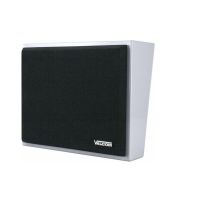
 Valcom One-Way/Talkback Programmable Gray With Black Grille ...
 Out of Stock
Brand: Valcom SKU: VIP-430A-IC Condition: NEW Call us for price(669) 244-0333
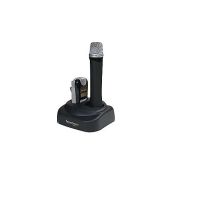
- USD 0.00 Frontrow Lyrik Student Microphone Charging Stand 1000-00220Out of Stock
Brand: FrontRow SKU: 1000-00220 Condition: NEW Call us for price(669) 244-0333
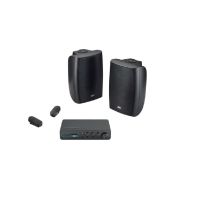
- USD 0.00 AVer Ampliwave SAA5 30W RMS Classroom Audio System AMPLISAA5Out of Stock
Brand: AVer SKU: AMPLISAA5 Condition: NEW Call us for price(669) 244-0333
- USD 0.00 JBL 15in 3-Way Point-Source Powered Speaker Black SRX835POut of Stock
Brand: JBL SKU: SRX835P Condition: NEW Call us for price(669) 244-0333
- USD 0.00 JBL SLP14/T 200W Low-Profile On-Wall Two-Way Loudspeaker (Bl...Out of Stock
Brand: JBL SKU: JBL-SLP14/T-BK Condition: NEW Call us for price(669) 244-0333
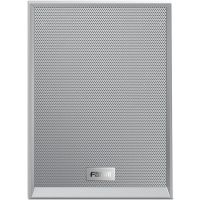
- USD 0.00 Fanvil A212-White Wall-Mounted IP Speaker WhiteOut of Stock
Brand: Fanvil SKU: A212-WHITE Condition: NEW Call us for price(669) 244-0333
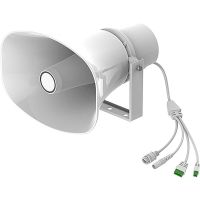
- USD 0.00 Fanvil A233 IP Horn Speaker 2 SIP LinesOut of Stock
Brand: Fanvil SKU: A233 Condition: NEW Call us for price(669) 244-0333
- USD 0.00
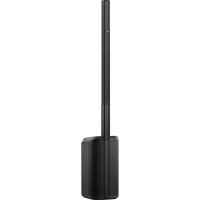
 Bose 840920-1100 L1 PRO16 Portable Line Array Speaker System...Out of Stock
Brand: Bose SKU: 840920-1100 Condition: NEW Call us for price(669) 244-0333
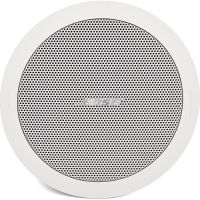
- USD 0.00 Bose 888472-1210 Professional AudioPack Pro C6 In-Ceiling Au...Out of Stock
Brand: Bose SKU: 888472-1210 Condition: NEW Call us for price(669) 244-0333


Network Speakers & IP Audio Systems | High-Quality Ethernet Speakers for Commercial Use
The tech world is progressing at breakneck speed, pushing boundaries of every aspect of our lives to the extreme. From business transactions to entertainment, you can find that technology is transforming our lives most profoundly. Similar to other walks of life, entertainment has also experienced rapid development. From smart and interactive displays to network audio amplifiers, manufacturers are offering innovative gadgets to take entertainment to the next level. Network Speakers, also dubbed as IP or network audio speakers, are one such device. Network speakers are devices that are designed to combine network and audio playback capabilities to stream audio seamlessly. They are connected to the network through network cables play music or other audio content directly without the need for additional speaker equipment. Users can thus enjoy high-quality digital audio over long distances without degradation, making them suitable for retail stores, large shopping malls, public markets, outdoor events, schools, and offices. If you are looking for the best network speakers for office use and other applications, this guide will help you regarding how to choose the right network speakers or IP audio systems for your commercial uses.
What are Network Speakers?
As the name indicates, network speakers, also known as IP speakers or network audio systems, are advanced and smart audio systems that receive and play audio over an Ethernet or IP network rather than traditional wired connections. They are provided with multiple advanced capabilities, including amplifiers, digital signal processing (DSP), and network interfaces for streaming music, announcements, or alerts.
These Ethernet speakers convert electrical signals into audio ones, and they are capable of fetching audio content from multiple sources, including but not limited to:
• Smartphones and tablets
• Computers and laptops
• Cloud-based music services
• Network-attached storage (NAS)
• Streaming platforms
Network speakers are IP audio systems that feature wireless connectivity, allowing users to connect them with other devices through WiFi or Bluetooth. Users can find these IP audio systems suitable for homes, offices, and public places. They can play various kinds of content, including music, news, audiobooks, and more, over the network, allowing users to enjoy an immersive audio experience.
More importantly, IP speakers are similar to smart devices, featuring multiple capabilities including built-in amplifiers, microphones for two-way talk, or even sensors to detect noise levels. You can also integrate them with IP Security Surveillance Systems, Smart Homes, and other applications.
Network Speakers vs Analog Speakers: Why Choose IP Speakers Rather Than Analog Speakers?
Network speakers are different from analog speakers in multiple ways. Let’s discuss the differences for your deeper understanding of these commercial network speakers.
|
Features |
Analog Speakers |
Network Speakers |
|
Connectivity |
dedicated audio wires |
Ethernet cables and network switches, |
|
Audio Transmission |
Continuous electrical signals that can degrade over distance or be prone to interference |
Audio signals are data packets that ensure high sound quality. |
|
Scalability |
Very difficult, demand new wiring and amplifiers for expansion |
Very easy, just need a connection with the internet and configuration through the software |
|
Management & control |
Local control |
Remote control via mobile app and with advanced management features such as zoning or scheduling. |
|
Audio Quality |
Vulnerable to interference and distortion |
High-fidelity and consistent sound |
|
Power Supply |
Separate power sources or shared lines are prone to cluttering. |
Power over Ethernet or PoE support allows users to transmit data, audio, and power through one cable. |
|
Integration |
Standalone |
Seamless integration with security, phones, or IoT devices. |
|
Functionality and Features |
Playback only |
Advanced features include playing stored messages, detecting sounds, and prioritizing alerts. |
|
Installation Cost |
Custom wiring, however cheaper compared to PoE |
High initial cost |
|
Maintenance |
Durable but harder to diagnose and fix problems |
Centralized control, supporting quick diagnostics and troubleshooting |
|
Distance coverage |
Limited, a few hundred feet |
Potentially unlimited via networks and even across buildings |
Key Features of Network Speakers:
Network Audio Speakers are provided with advanced functionalities and capabilities; knowing them can help choose the right scalable network audio solution for enterprises and other needs.
1. All-on-One Audio Solutions:
These IP speakers represent all-in-one, scalable audio solutions, combining hardware and software requirements into one compact form factor. They support effective and space-saving installations. You can thus purchase a network audio system for conference rooms and other applications.
2. Power over Ethernet Speakers:
Many of the network speakers come with support for Power over Ethernet, enabling users to transmit both power and data using a single cable, simplifying installation in commercial or home setups. This helps users save both cost and space as they need just one Ethernet cable, simplifying installations and saving space for space-constrained settings such as offices and schools.
3. Flexible Zone Allocations:
They are multi-room speakers, helping users synchronize audio across multiple rooms. You can group IP speakers and assign them to a zone. You can control them through the app, making PoE network speakers suitable for commercial buildings and multi-room and whole-house studio applications.
4. Optimal Voice & Background Music:
IP audio systems, for instance, Axis Network Speakers, feature pre-configured sounds. The built-in digital signal processing enables these Ethernet speakers to fine-tune the sound by utilizing advanced equalization, filtering, compression, and the like capabilities. You can thus enjoy an optimal and immersive sound experience.
5. Two-Way Communication:
Commercial network speakers are provided with integrated intercom modules, supporting two-way high-quality communication. It helps users enjoy better situation awareness and seamless communication between senders and receivers.
6. Flexible PA Speaker Solutions:
They are designed to act as individually configurable and addressable, making them suitable for networked installations, and suitable for creating seamless Public Assembly zones. You can thus go for Ethernet speakers for public address systems and other applications.
7. Scalable Network Audio Solutions:
These are scalable network audio solutions for enterprise, allowing users to add as many speakers as they need in line with growing requirements. You can easily update the system by adding speakers, setting up a new zone, revising content, and more.
8. Automatic Volume Adjustment:
Some advanced IP network speakers are equipped with IVC or Intelligent Volume Control. IVC enables these IP audio systems to adjust the sound automatically to the ambient noise. You can deploy these PoE speakers to maintain sound at precisely the level that is most comfortable for human ears.
9. Smart Speakers:
They are built on an open platform, making them compatible with third-party hardware and software platforms. For instance, you can integrate with Voice Assistant, Smart Home Devices, and more. There are dedicated apps for their management, allowing users access to volume control, playlist management, and speaker grouping.
Types of Network Speakers:
Network audio speakers are available in various types and specifications, allowing users to meet their commercial and enterprise needs easily.
Some of their types are discussed below for your better understanding of these smart audio systems.
1- Outdoor Horn Network Speakers:
As the name indicates, outdoor horn network speakers are used to address the K-12 school environment, a university campus, or a manufacturing plant. They are often provided with IP67 & NEMA 4X rating, support two-way communication, 280 Hz to 12.5 kHz frequency response, and deliver up to 121 dB Max SPL, and more.
Horn network speakers are suitable for delivering instructions during emergencies, deterring intrusion and unwanted activity, and announcing pre-recorded messages.
2- PoE IP Speakers:
These IP speakers are equipped with an advanced Power over Ethernet feature, helping users enjoy quick deployment and simplified setup. PoE ensures that one Cat cable supports transmission of both data and power, allowing cost-effectiveness and space-saving. Some of these PoE speakers are compatible with VoIP and SIP devices. They can deliver pre-recorded messages, support an IP67 weatherproof rating, and they come with PoE or 12/24 VDC power support, two-way communication, and more.
3- Round Ceiling IP Speakers:
These are advanced network speakers that come with multiple speakers, peripheral integration, VoIP and SIP integration, multicast and broadcast support, a built-in web server, and more.
4- Wall-Mounted Network Speakers:
These are wall-mounted IP speakers that come with multiple advanced features and capabilities. For instance, they support PoE, live/pre-recorded announcements, VoIP communication facilities, integrated amplifiers, line output for additional speakers, DTMF detection, and an integrated swiveling wall mount bracket for easy installation.
5- IP Cabinet Speakers:
This is another type of network audio speaker that is installed into ceiling tiles for a discreet and overhead audio solution. They are recommended network loudspeakers for retail stores, offices, and other applications.
6- Integrated Network Speaker Systems:
These are camera-ready network speakers that are designed for retail, classrooms, and offices. They come with network audio amplifiers, pre-installed camera mount, PoE networked audio connection, live or scheduled announcement, I/O and speaker connections, and more.
7- Network Pendant Speakers:
These IP speakers are suspended from high ceilings in open-plan spaces, supporting focused audio coverage where wall mounting is not feasible. They also come with advanced features such as remote health testing, all-in-one speaker solutions, PoE support, scalable and easy to integrate with existing systems, and more.
How to Choose the Right Network Speaker:
You need to choose the right network speakers very carefully, keeping in mind technology, environment, and applications.
Here are some considerations that can help you regarding how to choose the right network speaker for your business and other applications.
#1: Define Your Use Cases:
This is the first and foremost step. You need to know where you are going to deploy network audio systems. Concerning this:
• For a home studio, you should go for features such as multi-room sync, voice control (Alexa/Google), and hi-res streaming.
• For commercial and IT settings, you can opt for PoE IP speakers with mics for announcements or CCTV tie-ins and support for SIP/AES67.
• For public assemblies such as schools, you should go for horn or high-powered network speakers; alternatively, IP paging speakers with SIP support should be considered.
• Finally, if you are an audiophile, you should choose network speakers with DSP for precise imaging and low distortion at 85-95dB.
#2: Connectivity Type:
When it comes to connectivity, you need to choose from WiFi network speakers and Ethernet network speakers. Both of them have a specific set of applications. For instance:
• Ethernet Network Speakers offer a stable and reliable performance, making them suitable for commercial and enterprise settings. They support Power over Ethernet or PoE, enabling a single network cable (Cat) to transmit both data and power.
• WiFi Network Speakers are portable IP audio systems. Their performance is, however, determined by network strength, making them suitable only for homes and small offices.
#3: Support for Network Protocol:
The support for network protocols is critical for seamless compatibility. There are multiple protocols that you can consider. For instance:
• SIP (VoIP integration) for paging systems
• Dante / AES67 for professional audio networks
• AirPlay / Chromecast for home streaming
Typically, protocols such as AirPlay 2, UPnP, Spotify Connect, and Roon ensure broad streaming without phone dependency. There are some advanced IP speakers, SIP, and ONVIF for paging, alerts, and integration with security systems.
#4: Check Audio Quality (Core Performance):
There are multiple technical specs that you should consider before making the ultimate decision. For instance:
• The higher the power output, the louder the network speaker. Choose the power output that you need.
• The wider range of Frequency Response shows better sound details.
• SNR (Signal-to-Noise Ratio) indicates clarity of sound. The higher the SNR, the clearer the sound.
• Total Harmonic Distortion is also important. The lower the THD, the better for cleaner sound.
#05: Control & Integration:
You should choose the network speaker that supports control through mobile apps or a web-based browser. This feature can help you perform multiple tasks, such as remote control and health monitoring. Similarly, you should also go for network speakers that support seamless integration with smart home systems, VoIP / PBX systems, and automation platforms.
FAQs:
1- Can I mix IP and analog speakers?
Yes, you can. Many systems use both sound technologies. IP Audio Bridge is a device that can convert analog speakers into digital audio.
2- Do IP speakers need internet?
Not always. They need a Local Area Network for streaming from local devices or servers. However, if you want to source audio content from online streaming services, you need a reliable network.
3- How long do IP speakers last?
They can last 6 or 7 years, depending on the working environment and quality of the product.
4- What audio formats do network speakers support?
IP speakers support common formats such as MP3, AAC, WAV, and FLAC. Similarly, high-end speakers can also support high-resolution audio formats like 24-bit/96 kHz.
5- What are common protocols used in network speakers?
Here are common protocols that are used in Ethernet or WiFi network speakers:
• AirPlay
• Chromecast
• DLNA/UPnP
• Dante (for professional audio)
• AES67
Why Buy Network Speakers from Kijero?
Kijero is a leading eCommerce firm specializing in offering cost-effective IT equipment and gadgets. We deal in every major brand offering network speaker, network audio amplifiers, and other devices including:
• Jaba
• Axis Communication
• Logitech
• JBL
• Ultimate Ears
• Lenovo
Contact us today and take your entertainment and public announcement systems to next level.
Featured Products
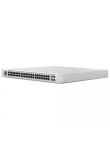
Ubiquiti Networks UniFi 48-Port Gigabit PoE+ Compliant Managed Switch Call us for price
(669) 244-0333