

Gaming Laptops
- USD 0.00

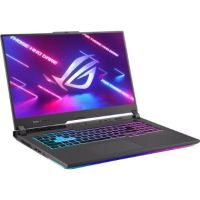
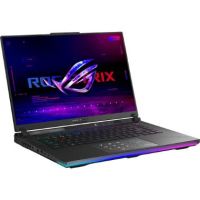
 ASUS 17.3" Republic of Gamers Strix G17 Gaming Laptop
 Out of Stock
Brand: ASUS SKU: G713PI-DB94 Condition: NEW Call us for price(669) 244-0333
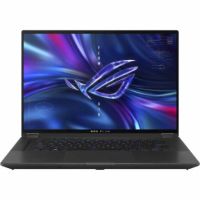
- USD 0.00 Asus ROG Flow X16 GV601 GV601VI-CS94 16" Touchscreen Co...Out of Stock
Brand: ASUS SKU: GV601VI-CS94 Condition: NEW Call us for price(669) 244-0333
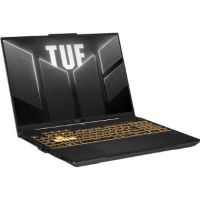
- USD 0.00 ASUS FX607JV-ES73 16" TUF Gaming F16 Laptop (Mecha Gray...Out of Stock
Brand: ASUS SKU: FX607JV-ES73 Condition: NEW Call us for price(669) 244-0333
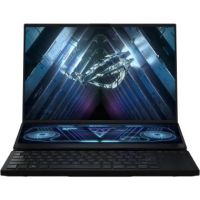
- USD 0.00 Asus ROG Zephyrus Duo 16 GX650 GX650PZ-XS96 16" Gaming ...Out of Stock
Brand: ASUS SKU: GX650PZ-XS96 Condition: NEW Call us for price(669) 244-0333
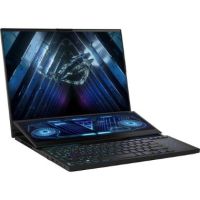
- USD 0.00 ASUS 16" Republic of Gamers Zephyrus Duo 16 Gaming Lapt...Out of Stock
Brand: ASUS SKU: GX650PY-XS97 Condition: NEW Call us for price(669) 244-0333
- USD 0.00 ASUS 16" Republic of Gamers Strix SCAR 16 Gaming LaptopOut of Stock
Brand: ASUS SKU: G634JZ-XS96 Condition: NEW Call us for price(669) 244-0333
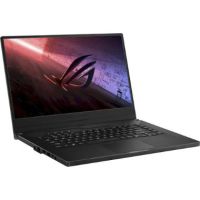
- USD 0.00 ASUS 15.6" Republic of Gamers Zephyrus G15 GA502IU Gami...Out of Stock
Brand: ASUS SKU: GA502IU-ES76 Condition: NEW Call us for price(669) 244-0333
Gaming Laptops for Sale – High-Performance Gaming Notebooks | Kijero
If you are looking for a gaming laptop, you have made the right decision. Gaming PCs are becoming out of reach as prices of desktop components such as RAM, SSDs, and graphics cards are skyrocketing. Gaming laptops are now a comparative cost-effective gaming machines, but what exactly gaming laptop are? Briefly speaking, they are high-performing laptops that come with discreet graphics cards, high refresh rate, upper-tiered CPUs, effective cooling mechanism, and the like. Professional gaming laptops are so powerful that they can be used as a general-purpose workstation for high-end tasks such as 3D rendering, 4K video editing, and other processor-heavy tasks. However, these high-performing gaming notebooks come in a great variety of options, featuring varying RAM, CPUs, GPUs, display sizes, cooling mechanisms, and port connectivity. This great diversity warrants our closer attention, which is why we have discussed them thoroughly so that you can choose the best gaming laptop in the current year and beyond.
Salient Features of Gaming Laptops:
Here are some features that make gaming laptops purpose-built and tailored for gaming.
1- NVIDIA GeForce RTX Graphics:
NVIDIA RTX GPUs are now considered the most vital prerequisite for any gaming laptop. NVIDIA RTX Gaming Laptops come with RTX 30, RTX 40, and RTX 50. Gaming laptops featuring RTX 50 GPUs, the most powerful GPUs in the market, support Blackwell architecture and DLSS 4 Multi Frame Generation with dedicated ray tracing cores and Tensor cores, among other capabilities. You can purchase gaming laptops featuring RTX 5090, RTX 5070, RTX 5070Ti, and RTX 5060. Gaming Laptop with RTX Graphics are often preferred over AMD Radeon, if priority is on unmatched ray tracing and AI capabilities.
NVIDIA GeForce gaming laptops are capable of rendering titles like Cyberpunk 2077 or Alan Wake 2 at high settings with ray-tracing enabling, allowing users enjoy cinematic-level illumination and competitive edge in the gaming. You can also find RTX 50 series-powered gaming laptops for esports, as they can push refresh rate up to 144Hz or even 240Hz, supporting a smooth gaming experience. What’s more, NVIDIA Reflex in RTX GPUs supports reduced system latency, decreasing the gap between input and on-screen responses.
2- AMD Radeon Graphics Solutions:
AMD Radeon GPUs have rapidly become a viable and cost-effective alternative to NVIDIA GeForce RTX GPUs. They have quickly reduced the gap between them and become a preferred choice for gamers who love to prioritize rasterization performance per dollar. AMD Ryzen Gaming Laptops featuring RX 7600M and 7700S are capable of delivering robust 1080p and 1440p performance without incurring the steep cost of buying RTX-enabled gaming laptops.
More importantly, AMD's FSR (Fidelity Super Resolution) does not demand any proprietary hardware, allowing users to deploy it for a broad range of games. Furthermore, AMD Radeon GPUs pair extremely well with AMD Ryzen CPUs, helping gamers enjoy AMD SmartShift technology for consistent and sustained gaming performance.
Intel Core and AMD Ryzen Processors:
GPUs are responsible for visual, and CPUs are designed to perform all the rest of the tasks that a gaming laptop can perform. Nowadays, CPUs perform more than mere processing instructions; they come with support for PUs (Neural Processing Units) to accelerate AI tasks.
In the gaming world, you can purchase Intel Core gaming laptops as well as AMD Ryzen gaming laptops. Intel Core Gaming Laptops can feature Intel's Core i7-13700H and i9-13900HX, however, users are suggested to Intel Core i7. Intel Core i9 laptops are recommended only for streaming, demanding software and 4K editing. Likewise, AMD Ryzen gaming laptops can also feature AMD's Ryzen 7 7745HX and Ryzen 9 7945H. Users are advised to buy only AMD Ryzen 7 gaming laptops; AMD Ryzen 9 CPUs are for high-end tasks like 3D rendering and running demanding software on laptops.
3- High Refresh Rate Displays:
Refresh rate is extremely important for an enhanced and smooth gaming experience. If you pair a low refresh rate display with mid-range or high-end GPUs like RTX 4090, you are certainly set to waste your money. You should also look for low response times and technologies such as G-Sync or FreeSync in the display of a gaming laptop.
The differences between a 144Hz gaming laptop and a 60Hz gaming laptop become immediately noticeable when you play fast-paced games such as Valorant, CS2, or Call of Duty. However, refresh rate beyond 144Hz, such as 240 Hz gaming laptop is not much discernible, however, you should go for low response time in this category. A gaming laptop panel supporting 3m or less response time can help you reduce motion blur and ghosting, allowing gamers to enjoy crisp and clear images even during intense gaming scenes.
As a recommendation, if you are going to purchase an RTX 4070 gaming laptop, you should look for a 1080p 165Hz or 1440p 165Hz panel to get the best return from your investment. Users are often recommended to find a high refresh rate gaming laptop supporting a QHD (2560×1440) display at 165Hz refresh rate for most of the high-end and mid-range games.
4- RGB Backlit Keyboards:
RGB backlit keyboards in gaming laptops are for both enhanced functionality and aesthetics. Gaming Laptops with RGB Keyboard can support per-key RGB, allowing users to enjoy zone-based illumination. RGB backlight keyboards bring vibrancy to your gaming setup. Users can experience immersive gameplay or a personalized aesthetic. RGB gaming laptops combine powerful performance with customizable lighting effects.
5- Wi-Fi 6, Wi-Fi 7, and Modern Connectivity:
Latency is a serious bottleneck in online gaming. Laptops featuring WiFi 5 can struggle in supporting high-end and latency-sensitive gaming as this WiFi standard works on now-congested frequency bands. Wi-Fi 6 (802.11ax) gaming laptops have overcome this problem by offering OFDMA scheduling and BSS coloring. Likewise, Wi-Fi 7 (802.11be) gaming laptops lower latency further thanks to Multi-Link Operation (MLO), enabling them to support simultaneous transmission on 2.4GHz, 5GHz, and 6GHz bands.
Wired connectivity is also important. You should look for Thunderbolt 4 or USB4 ports because they support high-speed SSD storage, external GPU enclosures, and multi-monitor setups. HDMI 2.1 output can help you connect 4K 120Hz external monitors. Finally, gamers are also suggested to look for 2.5GbE Ethernet in gaming laptop for rock-solid gaming performance.
Gaming Laptops by Performance Level
Gamers can choose gaming laptops of various specs, making them entry-level gaming laptops, mid-range gaming laptops, high-end gaming laptops, and professional and creator gaming laptops.
1. Entry-Level Gaming Laptops:
Entry-level gaming laptops are designed with an aim to provide gamers with a gaming experience without the price tags of a gaming desktop or gaming rig. They are gaming laptops under budget which feature NVIDIA RTX 4050 or RTX 5060, Intel Core i5 or AMD Ryzen 5 processor, 16GB DDR5 RAM, 512GB–1TB NVMe SSD, 15.6"–16" FHD (1920×1080) IPS, and 120Hz–144Hz refresh rate.
For example, ASUS ROG Zephyrus G15 (GA502IU-ES76) is a gaming laptop under budget, featuring 15.6" 1920 x 1080 144 Hz IPS display, NVIDIA GeForce GTX 1660 Ti (6GB GDDR6), 2.9 GHz AMD Ryzen 7 4800HS eight-core processor, 16GB of DDR4 memory, and a 1TB NVMe PCIe M.2 SSD. Other notable examples of entry-level gaming laptops are MSI Katana 15 HX, Acer Nitro V 16 AI, and Acer Nitro V 15 (ANV15-41-R2Y3).
However, they don’t come with a reliable cooling system, leading to throttle hardware in case of long sessions of gaming. Furthermore, storage is not large enough to store multiple modern AAA titles. Users interested in buying entry-level gaming laptops are suggested to look for an open M.2 slot for a future storage upgrade and dual-channel RAM configuration.
2. Mid-Range Gaming Laptops:
Under this category, manufacturers come with gaming laptops featuring RTX 4060, RTX 4070, RTX 5070, or RTX 5060 GPUs, Intel Core i7 (13th/14th Gen: i7-13650HX, i7-14650HX) or AMD Ryzen 7 (7435HS, 7640HS, 8845HS), 16GB DDR5 RAM, and 512GB–1TB NVMe SSD storage. Mid-range gaming laptops are also provided with QHD (2560×1440) panels with 144Hz or 165Hz refresh rate. However, 1440p resolution is also quite common.
Mid-range gaming laptops also come with comparatively better cooling systems, such as multi-heatpipe configurations or a vapor chamber. Users can thus enjoy a consistent frame rate and better performance. They also offer a better built quality, such as aluminum lids and reinforced hinges.
For instance, ASUS TUF Gaming F16 (FX607JV-ES73) is one example of mid-range laptops. It comes with a 13th Gen Intel® Core™ i7-13650HX Processor, NVIDIA® GeForce RTX™ 4060 Laptop GPU, 8GB DDR5-5600 SO-DIMM, 512GB PCIe® 4.0 NVMe™ M.2 SSD, 16" 165Hz display with Wi-Fi 6. This gaming laptop for AAA games also features Arc Flow Fans with 4 exhaust vents and 5 heat pipes, allowing users to enjoy sustained performance.
3. High-End Gaming Laptops:
High-end gaming laptops are designed primarily for gaming, offering purpose-built components including thermals, display, and build quality. They are often provided with RTX 4080, RTX 5070 Ti, and RTX 5080 GPUs, Intel Core i9 or AMD Ryzen 9 processors, and an advanced cooling system. They are also provided with a Mini-LED panel supporting 240Hz and even 360Hz refresh rate, making these gaming laptops with advanced cooling suitable for competitive gamers who want maximum responsiveness and visual fidelity. Gamers often prefer to have 32GB Gaming Laptops to meet their high-end gaming requirements.
These high-end gaming laptops are effectively portable gaming workstations, making them suitable gaming laptop for content creation including graphic designs, CAD, 3D rendering, and more.
ASUS 17.3" Republic of Gamers Strix G17 Gaming Laptop is one example of a high-end gaming laptop, offering an AMD Ryzen 9 processor, NVIDIA GeForce RTX 4070 GPU, 17.3" IPS display with 2560 x 1440 resolution, a 240 Hz refresh rate, and a 3 ms response time for a smooth and immersive gaming experience.
Similarly, ASUS 17.3" Republic of Gamers Strix G17 Gaming Laptop is another high-end gaming laptop supporting a portable & convertible design. It comes with 13th Gen Intel® Core™ i9-13900H Processor 2.6 GHz, NVIDIA® GeForce RTX™ 4070 Laptop GPU, QHD+ 16:10 (2560 x 1600, WQXGA), 16GB DDR5-4800 SO-DIMM x 2, and 1TB PCIe® 4.0 NVMe™ M.2 SSD. It comes with a touchscreen delivering 240Hz refresh rate. What’s more, the 3600 hinge allows users to convert them into a tablet and use them as a creative workstation as well.
4. Professional and Creator Gaming Systems:
Professional gaming laptops are top-tier gaming machines designed specifically for competitive gamers who demand extreme performance. They are power beasts, offering uncompromising performance and visual fidelity, delivering desktop-grade performance in a portable chassis. Professional gaming laptops are provided with workstation-grade GPUs such as RTX 5080 and RTX 5090. They are powered by top-tiered CPUs including Intel Core Ultra 9 and AMD Ryzen 9 HX processors. Display options are equally amazing including 4K OLED panels, 1600p Mini LED screens, and 18-inch chassis formats.
Thermals are also advanced to keep these powerhouses cool and calm. These premium gaming notebooks feature vapor chambers covering the full motherboard, liquid metal thermal interface materials, and a fully optimized fan configuration.
These professional gaming laptops are also suitable for those creators whose demand for extreme for high-end tasks such as 3D artists and game developers.
For instance, ASUS ROG Strix SCAR 16 (G634JZ-XS96) is one such top-tier gaming laptop. This premium gaming laptop features a 13th Gen Intel® Core™ i9-13980HX Processor, NVIDIA® GeForce RTX™ 4080 Laptop GPU, 16GB DDR5-4800 SO-DIMM x 2, and 1TB PCIe® 4.0 NVMe™ M.2 Performance SSD. Users can also enjoy a brilliant display with a high refresh rate. Alternatively, you can also look at ASUS ROG Zephyrus Duo 16 (GX650PZ-XS96) that is also considered the professional gaming laptop. Razer Blade 18 (Intel Core Ultra 9 275HX) is an RTX 5090 gaming laptop that is often ranked as the best professional laptop for gaming and content creation.
Gaming Laptops by Display Size:
Gaming laptops vary considerably when it comes to display size. You need to choose the right display size to enjoy an optimum gaming experience.
• 14-Inch Gaming Laptops:
The 14-inch form factor of a gaming laptop is a perfect nexus point between portability and performance. This form factor is suitable for gamers who love to move and play while refusing to carry heavier gaming laptops. Earlier, manufacturers found it very hard to pack high-performing components within a laptop chassis that is smaller than one foot. However, nowadays, 14-inch gaming laptops have undergone rapid development, featuring cutting-edge gaming capabilities that were once the exclusive domain of larger 17-inch gaming laptops.
Nowadays, 14-inch gaming laptops such as Razer Blade 14 (2025) come with up to AMD Ryzen AI 9 365, Nvidia GeForce RTX 5060 or 5070, up to 64 GB LPDDR5X-8000, 14-inch 1800p @ 120 Hz / OLED display, and up to 2 TB SSD NVMe PCIe 4.0 storage.
• 15.6-Inch Gaming Laptops:
15.6-inch gaming laptops have become very popular among gamers and content creators. You can find entry-level gaming laptops as well as high-end gaming laptops in this category. This form factor offers a perfect balance between portability, screen real estate, and cooling headroom. The chassis provides enough room for an advanced cooling system, the keyboard has full width and travel, and GPUs/CPUs can be fitted easily.
ASUS ROG Zephyrus G15 (GA502IU-ES76) is a perfect example showing how powerful a gaming laptop can be within a 15.6-inch form factor. It is provided with .9 GHz AMD Ryzen 7 4800HS eight-core processor, 16GB of DDR4 memory, a 1TB NVMe PCIe M.2 SSD, and an NVIDIA GeForce GTX 1660 Ti graphics card. What’s more, it is provided with 15.6" IPS display, supporting144 Hz refresh rate with Adaptive-Sync technology for fluid, tear-free gaming.
• 16-Inch Gaming Laptops:
16-inch form factor is also quite popular. Compared to 16:9 aspect ratio supported by 15.6-inch gaming laptops, 16-inch gaming laptops can support 16:10 aspect ratio, allowing users enhanced productivity and gaming experience. 16-inch chassis also provide sufficient internal space for deploying high-TDP GPUs such as RTX 4070, RTX 4070Ti, RTX 4080, and RTX 4090. Gamers can thus enjoy a smooth gaming experience rather than thermal throttling, which is common in smaller form factors.
ASUS ROG Zephyrus Duo 16 (GX650PZ-XS96) is an innovative dual-screen gaming laptop, featuring a secondary ScreenPad Plus display below the main panel. The primary display features QHD+ 16:10 (2560 x 1600, WQXGA) with support for FreeSync Premium Pro, anti-glare, and 3m response time. The secondary display, ScreenPad™ Plus, comes with a 14-inch display with 3840 x 1100(4K) resolution.
• 17-Inch and 18-Inch Gaming Laptops
Both 17-inch and 18-inch gaming laptops are desktop-replacement gaming machines, featuring aggressive cooling systems and ensures access to full TDP GPUs. The large chassis offers enough space for vapor chamber cooling that spans the full board width, ensuring optimum temperature for smooth gaming experience. They are premium gaming laptops, offering advanced and cutting-edge capabilities including GPUs, CPUs, displays, cooling systems, and the like.
ASUS ROG Strix G17 (G713PI-DB94) is one such example, offering an AMD Ryzen 9 processor, NVIDIA GeForce RTX 4070, 17.3" IPS with support for 2560 x 1440 resolution, a 240 Hz refresh rate, and a 3 ms response time. It also comes with 1TB M.2 PCIe 4.0 NVMe SSD storage and 16GB DDR5 RAM.
Featured Products