

Extended Battery Modules
- USD 1,171.95

 CyberPower BP72V60ART2U Extended Battery Module
 In Stock
Brand: CyberPower SKU: BP72V60ART2U Condition: NEW USD 1171.95 - USD 791.95
- USD 703.95 CyberPower Extended Battery Pack for PR750RTXL2U & PR100... In Stock
Brand: CyberPower SKU: BP48VP2U01 Condition: NEW USD 703.95 - USD 0.00 CyberPower BP48VP2U03 Extended Battery Module
 Out of Stock
Brand: CyberPower SKU: BP48VP2U03 Condition: NEW Call us for price(669) 244-0333
- USD 0.00 CyberPower BP36V60ART2U Extended Battery ModuleOut of Stock
Brand: CyberPower SKU: BP36V60ART2U Condition: NEW Call us for price(669) 244-0333
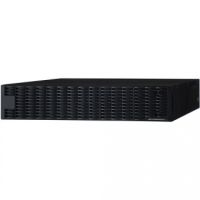
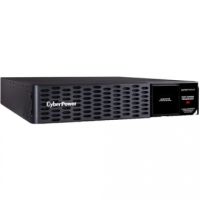
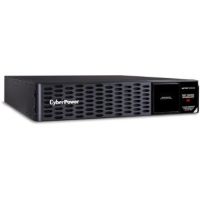
Extended Battery Modules for UPS – Expand Backup Power Runtime
In this age of digital transformation, where every business, whether SMEs, startups, or large organizations need to have an uninterruptible power supply, the importance of a UPS system cannot be overstated. What’s more, an Uninterruptible Power Supply or UPS protects against various power anomalies, including brownouts, frequency variations, harmonic distortion, line noise, overvoltage, power spikes, and voltage sags. These anomalies, if they remain unresolved, can prove extremely dangerous for service delivery and data protection. However, UPS systems often come with limited runtime, forcing people to shut down their systems ungracefully. To address these limitations, business or home owners can choose the UPS extended battery module or EBM. These extended battery modules are designed to increase backup time from a few minutes to several hours, allowing users to keep systems running during prolonged outages. Users can enjoy cost-effective and scalable power expansion solutions as they don’t need to replace the entire UPS system. However, these battery modules for UPS come in various specs and types, namely rack-mount battery modules, tower battery modules, and scalable battery modules; therefore, it can be very challenging for you to add the best available external battery pack to UPS for longer backup. Therefore, a brief overview of these external batteries for UPS has been given below.
Ready to dive in? Let’s move.
What is an Extended Battery Module (EBM)?
UPS battery expansion modules are an external pack of sealed lead-acid batteries that are designed to connect to compatible uninterruptible power supplies. They can enhance the runtime of connected UPS systems considerably during a power outage. They use 2U or 3U of rack-mount space and should be placed adjacent to the supported UPS.
Backup battery extension modules are essentially plug-and-play devices that are daisy-chained to the UPS via a dedicated port. Therefore, they can be detected automatically for seamless charging and discharging. UPS battery pack extensions are deployed for mission-critical equipment such as enterprise IT, like servers and surveillance systems.
Key Features of Extended Battery Modules:
Here are the key features of these extended battery modules for UPS that you need to know.
• Hot-Swappable Batteries:
These are hot swappable UPS battery modules for uninterrupted power, allowing users to insert or remove them without the need to shut down the entire UPS systems or connected loads. You can thus enjoy zero-downtime maintenance on systems like APC Symmetra or Eaton 9PX. You can thus purchase a UPS battery module for telecom and IT infrastructure and other critical environments where an uninterruptible power supply is crucial.
• Rack/Tower Compatibility:
This is another important feature of a battery module for UPS systems. They are compatible with both rack and tower configurations. Rack-mount models (e.g., 2U/3U) are used for server racks and data centers, and tower models are deployed for standalone or office environments. You can thus find these battery backups suitable for mixed environments as well, allowing you to meet your needs of data centers, server racks, and the like.
• Fast Charging Technology:
These extended runtime UPS battery modules are equipped with an advanced intelligent charging system, allowing users to quickly restore the backup power supply to full capacity. They come with intelligent chargers with temperature compensation recharge packs in 4-8 hours, helping users enjoy minimized downtime between backup cycles and improve overall system readiness.
• Scalable Battery Modules for Enterprise UPS Systems:
EBM for UPS systems feature daisy-chain up to 4-10 modules for custom runtime, helping users add new battery backups as they need to meet their growing requirements. You can thus connect multiple modules to increase backup duration, making these battery backup extension modules suitable for growing infrastructure and future upgrades.
• Plug-and-Play Connectivity:
External battery packs for UPS are equipped with dedicated DC ports, enabling instant auto-detection and seamless charging and discharging. They demand no complex configuration, supporting quick deployment and setup.
Benefits of Using Extended Battery Modules:
Extended battery modules for UPS are designed primarily to extend the runtime of the UPS system. However, they also offer multiple advantages that you need to know.
• Longer Backup Time:
External UPS battery backup can scale battery capacity via daisy-chaining, allowing users to extend the backup time from minutes to hours. You can thus deploy EBM for UPS for increasing the amount of time your equipment can run during a power outage, making the external battery module for Cyberpower UPS suitable for critical applications that cannot afford downtime.
• Uninterruptible Service Delivery:
Since they can extend backup and runtime by hours, businesses can continue to provide services even during power outages. Furthermore, extended runtime helps businesses avoid data losses and service interruptions, making sure that critical and core functions, such as IP surveillance or server processing, keep working.
• Protection of Critical Equipment:
Sudden power outage or fluctuations such as voltage spikes or surges can prove extremely damaging to your devices. The extended runtime provided by UPS's extended runtime battery solutions ensures protection of installed or deployed devices. They shield your servers, routers, switches, and CCTV from power fluctuations via integrated AVR and pure sine wave passthrough. You can thus protect your hardware from dangerous power fluctuations.
• Reduced Downtime:
Since they are hot-swappable batteries that help you ensure maintenance without any shutdown. In addition, some batteries come with UPS software that can indicate problems in UPS systems at an early stage, enabling users to quickly resolve the issues without causing any disturbance to service delivery. Therefore, you should install an extended battery module for network equipment backup, servers, networking & CCTV surveillance systems.
Types of Extended Battery Modules:
Based on design, battery technology, and applications, extended battery modules can be of various types. Let’s discuss them one by one.
• Rack Mount UPS Battery Extension Modules:
As the name indicates, rack-mount battery extension modules are built to fit into standard server racks. They are available in 2U, 3U, or larger sizes and easily integrate with a rack-mounted UPS system, making them preferable for data centers and IT environments.
• Tower Extended Battery Modules:
Tower battery modules for UPS are standalone vertical batteries, which are easy to install and relocate. They demand no rack infrastructure, making them suitable for offices, retail, and industrial setups.
• Modular/Scalable Battery Systems:
Scalable extended battery modules are designed for high scalability. They are provided with 8-12 hot-swappable battery slots, supporting custom capacity scaling for mission-critical servers. They support multiple battery modules to be added or removed and flexible runtime expansion, making them preferable for large-scale UPS systems.
Compatibility with UPS Systems:
In order to achieve a safe operation and warranty validity, you need to make sure that extended battery modules are matched precisely with the PS brand, voltage, and load capacity.
In this regard, you need to take care of the following aspects:
• Brand Compatibility:
PS extended runtime battery solutions are brand-specific, requiring a specific UPS brand for seamless detection, charging, and discharging. For example, APC extended battery modules are compatible with all Smart-UPS Modular Ultra models. Similarly, CyberPower extended battery modules are compatible with select UPS systems. Eaton UPS Battery Packs are compatible with some select UPS systems. Therefore, you need to choose the brand of extended battery module carefully.
• Voltage Matching:
Voltage compatibility is another major consideration that you should match. The voltage of extended battery modules must match the UPS DC bus voltage; otherwise, mismatched voltage can severely damage UPS systems.
Common voltage configuration of UPS battery expansion modules is 24V, 36V, 48V, and 72V systems. For instance, Eaten UPS Battery Packs are available up to 360DC V, allowing you to choose from a great variety of options.
• Load Capacity Considerations:
It should be noted that extended battery modules for UPS only extend runtime. They don’t expand the total output capacity. It is the UPS system that handles the load, demanding that your UPS is properly sized for the connected equipment.
Applications / Use Cases of Extended Battery Modules:
Similar to UPS systems, extended battery modules find extensive applications in multiple fields and domains.
For example, they are used in some of these applications:
• Data centers
• Network/server racks
• Telecom systems
• Security systems (CCTV, NVRs)
• Industrial environments
How to Choose the Right Extended Battery Module:
Needless to say, the UPS extended runtime battery solution for data centers and other applications must be chosen after careful consideration. You need to consider multiple technical and practical factors before making the ultimate choice.
For instance:
• Runtime Requirements:
First thing you need to determine required runtime for your requirements. Concerning this, a short runtime (5–10 minutes) is considered enough for orderly server shutdown or short mains interruptions. Medium runtime (15–30 minutes) is a requirement for temporary operation in public safety, communications, or industrial automation setups. Long runtime (1+ hour) is suggested for continuous operation for pump control, transport signaling, or remote comms sites.
• UPS Compatibility
It should be noted clearly that not all UPS supports external backup batteries; you need to check the compatibility of the UPS with the intended extended backup battery modules. Concerning this, you need to match the EBM precisely to your UPS brand, model, and DC voltage. Seamless UPS compatibility ensures auto-detection and warranty.
• Form Factor (Rack or Tower):
You need to form a factor of intended battery backup modules that fit comfortably into your settings. For instance, you should go for a rack-mount extended battery module for server racks and data centers, and tower extended battery modules for offices and standalone setups.
• Battery Capacity:
Battery capacity is measured in Ampere Hours (Ah), which is the amount of energy that an extended battery module can store. Generally, the higher Ah, the long runtime. With an increase in Ah of extended backup batteries, the runtime is enhanced proportionally. Lithium batteries offer better density and recharge.
• Scalability:
You need to choose EBMs supporting daisy-chaining (up to 4-10 units) or modular slots for growth, allowing you to add more units to increase runtime as needed. For instance, Eaton 9PX or APC X-Series are some extended battery modules that support modular design.
FAQs:
1. How many EBMs can I add to my UPS?
It depends upon UPS system. For instance, Eaton 5PX G2 supports up to 4 EBMs, while some APC Smart-UPS X models can support up to 10 packs. What’s more, some modular EBMs can even accommodate more units.
2. Do EBMs increase the power capacity of a UPS?
No, they don’t. They can only increase the backup runtime of UPS systems.
3. How much runtime can an EBM add?
The runtime depends upon the load connected to the UPS, battery capacity (Ah), and number of EBMs used.
4. What is the typical battery type used in EBMs?
Sealed Lead-Acid (SLA) batteries and Lithium-ion batteries (in modern systems) are used mostly in extended backup battery modules for UPS.
5. What maintenance do EBMs require?
They are usually maintenance-free. However, you should charge them at least every 6 months during storage to prevent degradation. Lead-Acid batteries can last up to 3–5 years whereas Lithium-ion versions can last up to 10 years.
Featured Products