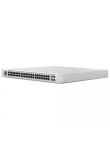


Fiber Optic Transceivers
- USD 35.16

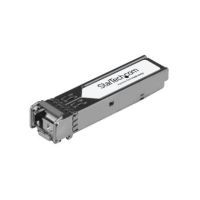
 StarTech Extreme Networks 10052 Compatible SFP Transceiver M...
 In Stock
Brand: StarTech SKU: 10052-ST Condition: NEW USD 35.16 - USD 32.98 StarTech Extreme Networks 10051-ST Compatible SFP Transceive... In Stock
Brand: StarTech SKU: 10051-ST Condition: NEW USD 32.98 - USD 27.32 StarTech AJ717AST HP AJ717A Compatible SFP+ Transceiver Modu... In Stock
Brand: StarTech SKU: AJ717AST Condition: NEW USD 27.32 - USD 19.47 StarTech Extreme Networks 10056H Compatible SFP Transceiver ... In Stock
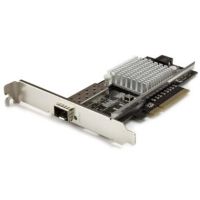
Brand: StarTech SKU: 10056H-ST Condition: NEW USD 19.47 - USD 0.00 StarTech PEX10000SFPI 1-Port 10G Open SFP+ Network Card PCIe...
 Out of Stock
Brand: StarTech SKU: PEX10000SFPI Condition: NEW Call us for price(669) 244-0333
- USD 0.00 StarTech Dell EMC SFP-1G-BX40-U Compatible SFP Transceiver M...Out of Stock
Brand: StarTech SKU: SFP1GBX40UES Condition: NEW Call us for price(669) 244-0333
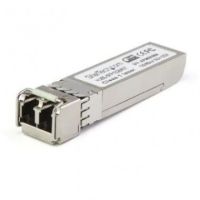
- USD 0.00 StarTech Dell EMC SFP-10G-USR Compatible SFP+ Transceiver Mo...Out of Stock
Brand: StarTech SKU: SFP10GUSREMS Condition: NEW Call us for price(669) 244-0333
- USD 0.00 StarTech 455889-B21-ST Compatible SFP+Out of Stock
Brand: StarTech SKU: 455889-B21-ST Condition: NEW Call us for price(669) 244-0333
- USD 0.00 StarTech Extreme Networks 10065 Compatible SFP Transceiver M...Out of Stock
Brand: StarTech SKU: 10065-ST Condition: NEW Call us for price(669) 244-0333
- USD 0.00 StarTech Dell SFP10GBX10DS CompatibleOut of Stock
Brand: StarTech SKU: SFP10GBX10DS Condition: NEW Call us for price(669) 244-0333
- USD 0.00 StarTech SFP10GZREMST Dell EMC SFP-10G-ZR Compatible SFP+ Mo...Out of Stock
Brand: StarTech SKU: SFP10GZREMST Condition: NEW Call us for price(669) 244-0333
- USD 0.00 StarTech SFP10GBX10US network transceiver moduleOut of Stock
Brand: StarTech SKU: SFP10GBX10US Condition: NEW Call us for price(669) 244-0333
- USD 0.00 StarTech.com SFP10GBX40DS network transceiver moduleOut of Stock
Brand: StarTech SKU: SFP10GBX40DS Condition: NEW Call us for price(669) 244-0333
- USD 0.00 StarTech SFP-10G-BX60U-I-ST network transceiver moduleOut of Stock
Brand: StarTech SKU: SFP-10G-BX60U-I-ST Condition: NEW Call us for price(669) 244-0333
- USD 0.00 StarTech JG234A-ST HP JG234A Compatible SFP+ ModuleOut of Stock
Brand: StarTech SKU: JG234A-ST Condition: NEW Call us for price(669) 244-0333
- USD 0.00 StarTech JD093A-ST HPE JD093A Compatible SFP+ ModuleOut of Stock
Brand: StarTech SKU: JD093A-ST Condition: NEW Call us for price(669) 244-0333
- USD 0.00 StarTech HPE JD093B-ST Compatible SFP+ ModuleOut of Stock
Brand: StarTech SKU: JD093B-ST Condition: NEW Call us for price(669) 244-0333
- USD 0.00 StarTech HPE 747698-B21-ST Compatible QSFP+ ModuleOut of Stock
Brand: StarTech SKU: 747698-B21-ST Condition: NEW Call us for price(669) 244-0333
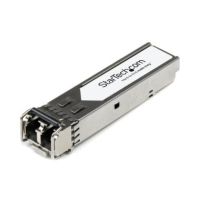
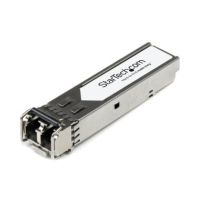
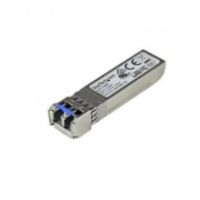
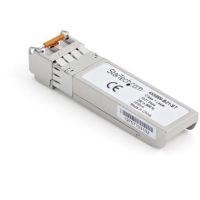
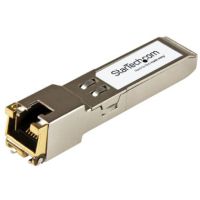
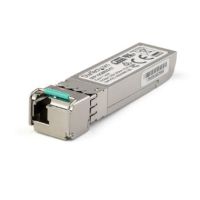
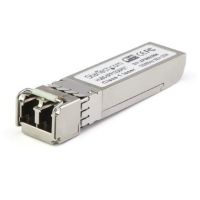
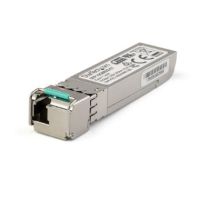
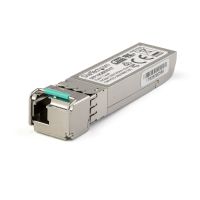
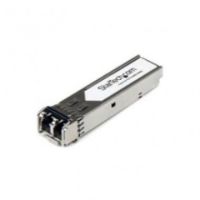
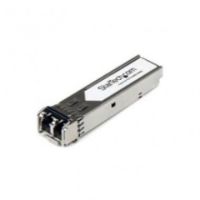
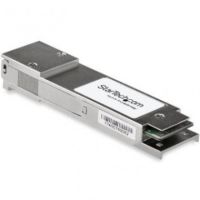
High-Speed Fiber Optic Transceivers for Enterprise Networks
Today’s digital communication has developed rapidly, bringing together the entire globe and offering instant data exchanges and safe transactions. To meet the digital needs of the 21st century, one cannot overemphasize the importance of secure and fast data transmission. Fiber optics and Copper cabling are two primary means for data transmission; however, fiber optics has become the preferred choice when it comes to long-distance communication. At the heart of fiber optics-based data transmission lies fiber optics transceivers. These transceivers are small but powerful devices, designed to ensure seamless conversion of electrical signals into optical ones and vice versa. They transmit data through fiber optics cables as a pulse of light; therefore, they are deployed for achieving high-speed connectivity over long distances with minimal loss and interference. Thanks to high-speed communication, long-distance transmission, modular design for easy scalability, and reliable security, fiber optic transceivers have become the backbone of today’s network, laying foundations for everything, including global telecommunications networks, undersea cables, data centers, cloud computing platforms, 5G mobile systems, and more. Here we are going to discuss network transceiver modules, including their types such as 10G SFP+ modules, 40G QSFP+ transceivers, 100G QSFP28 modules, single-mode fiber transceivers, and Multimode fiber modules, so that you can purchase the best fiber optic transceivers for network switches and other applications.
What are Fiber Optics Transceivers?
Simply speaking, fiber optics transceivers are simple but extremely powerful devices. They can receive and transmit data. Optical transceivers are designed to convert electrical signals to optical (light) signals and optical signals to electrical signals. In fiber optics communication, data is sent as a pulse of light, making fiber optics transceiver modules an important part of fiber optic networking solutions. In other words, they act like a bridge between electrical signals (from devices like switches, routers, or servers) and optical signals (light traveling through fiber cables).
How Fiber Optics Transceivers Work:
These optical communication modules have a very simple modus operandi. A network device, such as a switch or router, transmits electrical signals. The transceiver attached to them converts these electrical signals into light signals through an LED or a laser. These optical signals travel through fiber optic cable and reach the destination. Finally, another transceiver module plugged to end point convert these optical signals into electrical ones so that the networking device at the receiving end can work properly.
Types of Fiber Optic Transceivers:
We can classify network optical transceivers into different types. For instance:
1. SFP (Small Form‑factor Pluggable):
SFP transceivers are designed to accommodate up to 1 Gbps data transfer rate, making them suitable for legacy infrastructure systems and enterprise networks. They can support up to 150km range. They are common in Gigabit Ethernet and 1–2 Gbps SAN links.
2. SFP+:
This is another Gigabit SFP module that is an enhanced version of SFP, handling up to 10Gb data transfer rate. They are backward compatible with SFP transceivers, making them the best fiber optic transceivers for data centers, high-speed enterprise networking, and Storage Area Network (SAN).
3. Quad Small Form-Factor Pluggable (QSFP) Transceiver Modules:
QSFP transceivers are high-speed transceivers, supporting up to 40Gbps data transfer rate. They are more suitable for data distribution layers, core network infrastructure, and high-performance computing.
You can also purchase QSFP+ transceivers, offering better speed and performance. Similarly, QSFP28 transceivers are also an advanced version of the QSFP form factor, delivering up to 100Gbps speed. You can deploy 100G QSFP28 modules for hyperscale data centers, high-throughput cloud applications, telecom backbone networks, and more, making them suitable for high-speed QSFP transceivers for enterprise networks and other applications.
4. Octal Small Form Factor Pluggable or OSFP Transceivers:
OSFP form factor is slightly larger than QSFP. They combine 8 electrical lanes. Since each electrical lane in fiber optics can support up to 50Gbps data, OSFP transceivers can deliver up to 400Gbps aggregate data. They are therefore recommended for enterprise networks.
5. CFP (C Form-Factor Pluggable):
CFP transceivers are capable of handling incredible data speed, ranging from 100Gbps to 400Gbps. They have a comparatively larger form factor and are used extensively for ultra-high speed network applications, including high-bandwidth backbones and carrier networks.
CFP modules are available in various variants. For instance:
Standard CFP Transceivers are compact in size and support up to 100Gbps data transfer rate. Their compact form factor helps network administrators reduce congested cabling in data centers.
CFP2 Fiber Transceivers feature a form factor that is half of standard CFP modules, and they come with an extensive range of customization options. They are recommended for regional applications and data center interconnections.
CFP4 Fiber Transceivers offer a size that is a quarter of the standard CFP. They are therefore suitable for space-constrained and crowded settings.
CFP8 Fiber transceivers come in the same size as that of CFP2; however, they support four times the bandwidth density of CFP2. They can deliver an incredible 400Gbps aggregate data rate, making them ideal high-speed fiber optic transceivers for enterprise networks.
Single Mode Vs Multimode Transceivers:
When it comes to long-distance or short-distance communication, you end up choosing between Single-Mode Transceivers and Multi-Mode Transceivers.
Single-Mode Transceivers are long-range, extended-reach, and ultra-long-reach transceivers. They can support up to 10km, 40km, or 100km distances, making them suitable fiber transceiver modules for long-distance communication, such as extended local networks and even long-haul networks of 100 km or more. They are also deployed for wide-area networks and telecom networks.
Multi-Mode Transceivers are designed for short-range communication, such as within a data center. They can support up to 300 meters of distance. Multi-Mode Transceivers are available in various variants: OM1, OM2, OM3, OM4.
OM1 and OM2 fibers are more suitable for short-range and low-speed fiber optics networks, such as 100Mbps to 1Gbps, and they often come with LED transmitters.
OM3 and OM4 fibers are more suitable for high-speed fiber optics networks such as 10Gbps or higher. OM3 and OM4 are laser-optimized multimode fibers.
It should be noted that single-mode transceiver modules are expensive compared to multimode transceivers. Therefore, if you are looking for data center interconnection or Local Area Network (LAN, you should go for Multi-Mode Transceiver Modules.
How to Choose Network Transceiver Modules:
Here are the key features of a fiber optics transceiver module that you can look into.
1- Wavelength:
Wavelength is an important feature of transceivers. It determines compatibility with fiber type and distance capabilities. The choice of wavelength has a direct impact on compatible hardware, the network’s speed, coverage, and other characteristics.
As a thumb rule, a shorter wavelength supports higher speed, but shorter distance, whereas a longer wavelength offers long-distance communication but at a slower speed.
Wavelength can be of three types: 850nm wavelength is selected for higher speed, and it can deliver signals up to 500m. 1310nm wavelength can transmit signals up to 40km, and 1550nm wavelength can also cover almost the same distance.
2- Date Rate of Transceiver Modules:
The data capacity of transceiver modules is determined by modulation technologies and form factor. You can purchase a variety of transceiver modules when it comes to supported data rates. For instance, you can purchase 10G SFP+ modules, 40G QSFP+ transceivers, and so on.
For instance:
• 1 Gbps (SFP)
• 10 Gbps (SFP+)
• 40 Gbps (QSFP+)
• 100 Gbps (QSFP28)
• 400 Gbps ( CFP8)
3- Connectors Types:
You need to match fiber optics cables with the right type of connectors to enjoy optimum and reliable network speed.
Connectors are of various types: SC (Subscriber Connector), LC (Lucent Connector), ST (Straight Tip), and MTP/MPO (Multi-fiber Push On/Pull Off).
Let’s discuss them one by one.
• LC Connectors come in a very compact size and feature a latch-style mechanism, making them suitable for modern high-capacity networks and high-density applications such as data centers and LANs.
• SC Connectors feature a push-pull mechanism, making them ideal for networks where frequent connections/disconnections are demanded. They are preferred for datacoms/telecommunications and the like.
• MTP/MPO Connectors are also known as multi-fiber connectors, as they can hold up to 24 fibers themselves. They are suitable for high-density networks such as data centers, where network admins need trunk cables instantly. Similarly, they are also suitable for backbone cabling systems.
• ST Connectors feature a bayonet-style coupling mechanism, making them suitable for outdoor settings such as campuses where long-distance networking is required.
4- Compatibility with the Devices:
This is the most important consideration that you make. You need to make sure that the fiber optics transceivers that you are going to purchase are completely compatible with your existing switches, routers, and other hardware units.
The transceiver modules must also feature the same protocols and standards as used in the network, such as Ethernet, Fiber Channel, or InfiniBand.
You also make sure that the form factor of transceivers, for instance, SFP (small form-factor pluggable), SFP+ (enhanced small form-factor pluggable plus), or QSFP (quad small form-factor pluggable), is also compatible so that they can work seamlessly with your IT infrastructure.
Finally, you should also consider manufacturer compatibility, as some manufacturers recommend against third-party transceivers.
Applications of Fiber Optic Transceivers:
Over the years, fiber optics transceivers have found extensive applications across multiple fields and domains. For instance:
• Data centers
• Telecommunications networks
• Enterprise & campus networks
• Internet Service Providers (ISPs)
• Cloud computing infrastructure
• Storage Area Networks (SANs)
• High-performance computing (HPC)
• Video surveillance systems (CCTV/IP)
• Broadcasting & media industry
• Industrial automation
• Military & defense communications
• Smart city infrastructure
• Healthcare systems
• Financial institutions
• Education & research networks
• Cable television (CATV)
Benefits of Fiber Optic Transceivers:
Fiber optics transceivers have become indispensable components of modern IT infrastructure thanks to the multiple advantages they offer to users across various fields and domains.
• High-Speed Data Transmission:
Optical communication modules are known for delivering incredible speed. In comparison with copper-based cabling, fiber optics can deliver faster, more reliable, and longer-distance data transfer. You can enjoy up to 400Gbps and even 800 Gbps aggregate data rates, making fiber optics networking solutions suitable for bandwidth-intensive applications.
• No Signal Loss:
Both multi-mode and single-mode fiber optics transceivers create a long-distance or short-distance network infrastructure that is less prone to interference and signal degradation compared to copper cables. They literally don’t lose any signal, making network transceiver modules suitable for challenging outdoor conditions. The consistent data transmission and minimized downtime make them an ideal choice for mission-critical IT infrastructure.
• Long-Distance Communication:
Since fiber optics transmits data as a pulse of light, it can deliver data transfer for hundred for kilometers. For instance, single-mode fiber (SMF) supports the longest distances, commonly reaching 100–200 km without amplification in practical, high-speed networks. You can extend that coverage by thousands of kilometers with advanced optical amplifiers. For example, long-haul and submarine cables can span thousands of kilometers (e.g., 3,000+ km), providing reliable network connections across the globe.
• Scalable Networking:
Network transceiver modules offer high scalability, allowing businesses to expand their network by adding more connections, increasing bandwidth, and accommodating growing data demands without significant upgrades or investments. You can thus find fiber optics a cost-effective and future-proof networking solution to remain ahead of the curve in this age of fierce competition.
Frequently Asked Questions or FAQs:
1- How far can SFP transceivers transmit?
The coverage of distance is determined by wavelength and form factors. For instance, a multi-mode transceiver module can support up to 550km, whereas a single-mode transceiver can help users transmit data up to 100km or even above. Copper-based networking transceivers remain limited to 100m distance at max.
2- What is Digital Optical Monitoring (DOM)?
DOM is an important feature of transceiver modules; it helps users monitor various parameters of network transceiver modules, including optical output power, optical input power, temperature, laser bias current, and transceiver supply voltage.
3- Are fiber optic transceiver modules secure for data transmission?
Yes, they are. Fiber optics networking solutions feature enhanced security features, safeguarding data from data interception and cyberattacks.
4- Are fiber optic transceiver modules energy efficient?
Fiber optics transceivers are way more energy-efficient than their counterpart: copper-based networking. They consume less energy and deliver robust performance and faster speed.
5- Can We Use SFP Hardware in SFP+ Slots?
Yes, SFP+ ports can accept SFP fiber optics, but speed will remain 1Gbps as permitted by SFP transceiver modules.
Why Buy from Kijero:
Kijero is a prominent eCommerce firm in the USA offering cost-effective, scalable, and top-notch networking solutions from leading manufacturers such as Netgear, Juniper, StartTech and more. Our product portfolio is extensive, covering routers, modems, networking cables, and, more importantly, Fiber Optics Transceivers.
Contact us today and take your networking experience to the next level at the best possible price in the USA market.
Featured Products
Ubiquiti Networks UniFi 48-Port Gigabit PoE+ Compliant Managed Switch Call us for price
(669) 244-0333